
Unprotected sex or a contraceptive failure (a broken condom, a slipped ring, a missed pill) can provoke anxiety, uncertainty, and urgency. In those critical moments, many wonder: “What can I do now?” Emergency contraception (EC) is one tool that can help reduce the chance of pregnancy—if used correctly and promptly.
At Ava Health, we believe in empowering you with accurate, medically grounded information. In this post, we’ll walk through what emergency contraception is, how it works, and what effectiveness rates are.
What Is Emergency Contraception?
Definition and Purpose
Emergency contraception (also called postcoital contraception) refers to methods used after sexual activity to prevent pregnancy. It is not intended for regular use, but as a backup when the usual contraception was not used or failed.
Crucially, EC does not terminate an implanted pregnancy. EC works before fertilization or before implantation—by delaying ovulation, interfering with fertilization, or creating an environment less favorable for implantation.
Because of this, emergency contraception is not the same as the abortion pill (medical abortion). EC cannot harm or disrupt a pregnancy that has already been implanted, but if not already implanted, it may create an environment less favorable for implantation.
When Might Someone Consider Using EC?
Emergency contraception might be used when:
- There was sex without any contraception.
- A contraception method failed (e.g., condom breakage, dislodgement, missed pill).
- Sexual assault (in which case guidance and medical support are especially important).
It’s best to think of EC as an emergency option, as the name states—not a replacement for consistent, reliable contraception. If you want to learn more about types of birth control that will be better suited for consistent, long-term use, check out What are the different types of Birth Control?
Types of Emergency Contraception
In the U.S., there are several EC options available. Each has its own pros & cons, time limits, and considerations.
Method | Window (after unprotected sex) | Mechanism / Notes | Strengths & Limitations |
Levonorgestrel (LNG) pills (e.g. Plan B One-Step, generics) | Within 3 days (some up to 5 days) | Delays or prevents ovulation; thickens cervical mucus; may interfere with sperm movement | Over the counter, easy access; effectiveness declines with time; possibly less effective for higher body weight/BMI |
Ulipristal acetate (UPA) (brand: Ella) | Up to 5 days (120 hours) | Selective progesterone receptor modulator; delays ovulation even closer to the LH surge | Can be more effective than LNG in days 3–5; requires prescription in some settings; interactions with hormonal contraceptives must be considered |
Copper IUD (Cu-IUD) | Up to 5 days, possibly longer depending on ovulation timing | Releases copper ions toxic to sperm; prevents fertilization and alters environment; may also interfere with implantation. For a deeper dive on IUD’s, check out What is an IUD? | Can be most effective option (> 99% efficacy); also functions as long-term contraception if left in place; requires insertion by provider; not ideal for all people |
Combined estrogen + progestin regimen (Yuzpe method) | Within 3 days | Uses higher doses of combined oral contraceptives | Less effective and more likely to cause nausea than other dedicated EC options |
How Does Emergency Contraception Work? (Mechanisms)
Understanding the biological mechanisms behind EC can inform better decision-making.
1. Delay or Inhibition of Ovulation
The most widely used and primary mechanism for hormonal EC (LNG and UPA) is delaying or preventing ovulation so that no egg is released for sperm to fertilize.
- Levonorgestrel pills act to disrupt the hormonal signals that trigger the LH surge, thereby delaying or preventing ovulation.
- Ulipristal acetate is effective closer to the time of ovulation because it more strongly blocks progesterone receptor binding, which can more strictly delay the LH surge.
If ovulation has already occurred before the pill is taken, the pills cannot carry out what they are intended to do, and therefore, are ineffective.
2. Alteration of Cervical Mucus & Sperm Mobility
Hormonal EC may thicken cervical mucus, making it harder for sperm to reach the egg, and reduce the motility or viability of sperm.
3. Altering the Uterine / Endometrial Environment
The National Institute of Health suggests that EC may make the endometrium less favorable for implantation, but this effect, if any, is less certain and likely minor compared to ovulation inhibition.
It’s important to emphasize: if implantation has already occurred, EC will not dislodge or end the pregnancy.
4. Copper’s Spermotoxic Effects (for Cu-IUD)
The copper IUD works differently from hormonal pills:
- Copper ions interfere with sperm motility and viability, making fertilization less likely.
- The presence of the IUD provokes an inflammatory response in the uterine environment that is hostile to sperm and possibly ova.
- The Cu-IUD may also change the endometrial environment to reduce the possibility of implantation. Though again, its primary effect is prevention of fertilization.
Because the IUD remains in place, it may also act as ongoing contraception beyond its use as emergency contraception. For more information on IUD’s check out What is an IUD?
Timing & Effectiveness
Timing
Timing is crucial to the effectiveness of EC. Because of the mechanisms in place to prevent pregnancy, the effectiveness is highest immediately after unprotected sex and declines over time.
- Levonorgestrel pills generally are most effective within 72 hours (3 days). Some data supports use up to 120 hours (5 days), but with reduced efficacy.
- Ulipristal acetate retains relatively stronger efficacy across days 3 to 5 compared to LNG.
- Copper IUD can prevent pregnancy if placed within 5 days after intercourse, and in some cases even beyond, depending on ovulation timing.
Delays reduce the probability that EC will prevent pregnancy.
How Effective Is It?
Effectiveness is often reported as the reduction in the chances of getting pregnant compared with using no contraceptive method at all. Actual pregnancy rates after EC use will depend on the timing and type of method.
- Copper IUD is considered the most effective EC method—over 99% effective if inserted promptly.
- Levonorgestrel pills reduce pregnancy risk by about 50–80%, depending on when they are taken.
- Ulipristal acetate generally has higher efficacy than LNG in the 3–5-day window.
It’s important to note that no EC is ever 100% effective. The chance of failure increases with time delay, and none of the above methods offer absolute certainty.
Factors That Influence Effectiveness
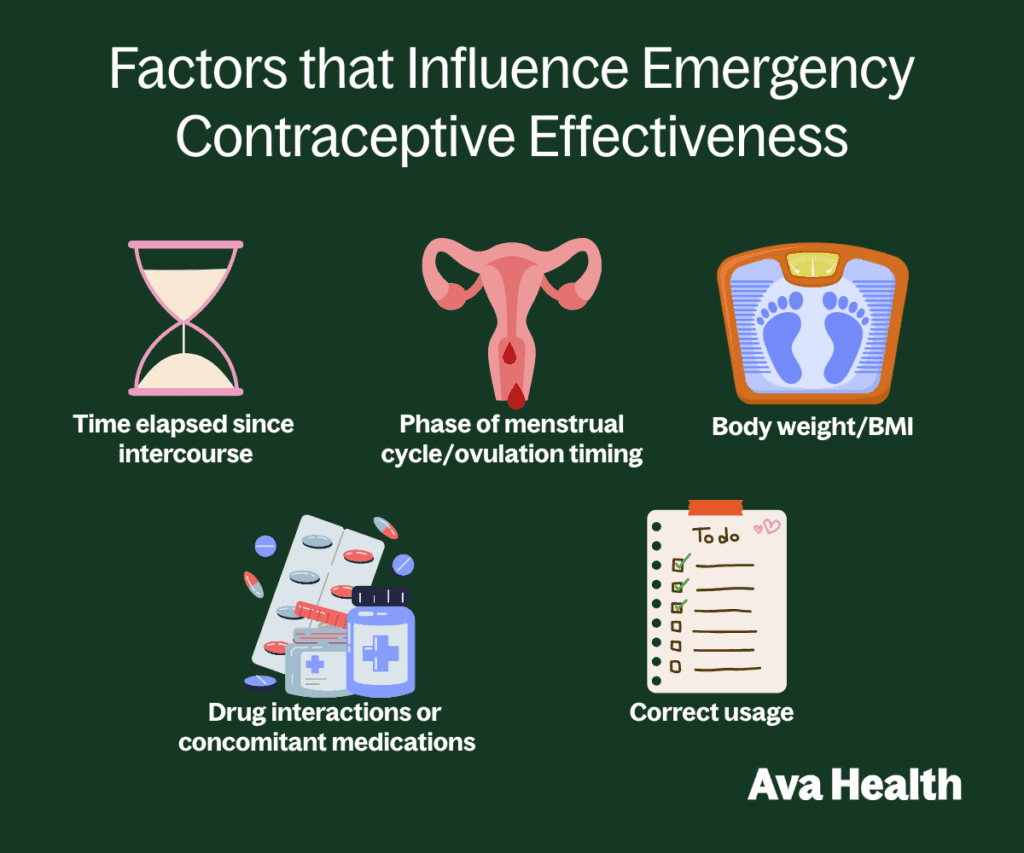
Several factors can alter EC effectiveness:
- Time elapsed since intercourse – later use reduces effect.
- Phase of menstrual cycle / ovulation timing – if ovulation has already occurred, EC is not effective.
- Body weight / BMI – Some studies suggest that higher BMI may reduce the effectiveness of levonorgestrel pills. UPA or IUD may be better in such cases.
- Drug interactions or concomitant medications – especially for UPA, may cause EC to be ineffective in carrying out its job.
- Correct usage (full dose, no vomiting, etc.)
Because of these variables, counseling and individualized decision-making are extremely important.
Safety, Side Effects, and Considerations
Safety
Emergency contraception is considered not physically harmful for most women, including adolescents and many individuals with medical conditions. However, since everyone is different, you’ll want to take your own medical history, reproductive health, and personal values into consideration.
There is no evidence that using EC affects future fertility generally.
Most importantly, EC does not interfere with an implanted pregnancy. If a pregnancy is already implanted, EC will not end it or harm it.
Common Side Effects
Side effects are usually mild, temporary, and resolve on their own. Possible side effects include:
- Nausea (sometimes vomiting)
- Spotting or irregular bleeding
- Headache
- Dizziness
- Breast tenderness
- Cramping or abdominal pain
- Changes in the timing, volume, or character of the next period
- Fatigue
If vomiting occurs within 2 hours of taking a pill, a repeat dose may be needed. (Check product instructions or talk to a provider.)
Severe side effects or pain are uncommon; but if you experience intense abdominal pain, fever, fainting, or heavy bleeding, seek immediate medical care.
Special Populations & Considerations
- Breastfeeding: Levonorgestrel is generally considered safe during lactation.
- Certain health conditions (e.g. liver disease, known allergies) may require consultation with a healthcare provider before use.
- Drug interactions: Especially with UPA, certain medications (e.g. enzyme inducers) can reduce its effectiveness.
- Timing of subsequent contraception: If you took UPA, you may need to delay certain hormonal contraceptives for a few days.
Myths, Misconceptions & Facts
Myth / Misconception | Reality / Fact |
EC is the same as abortion | False. EC prevents pregnancy before fertilization; abortion terminates an already-implanted pregnancy. |
EC causes infertility or future miscarriages | There is no evidence that using EC affects future fertility generally. |
You can take EC any time in your cycle and it will always prevent implantation | EC is time-sensitive and much less effective after ovulation; it does not work after implantation. |
EC is only for “morning after” | The term “morning after pill” is misleading—many EC methods can be used up to 3–5 days after. |
The more EC you take, the better | Doubling or repeating EC doses does not improve efficacy. It’s important to only take the correct dose. If you find yourself needing emergency contraception often, it may be time to check out another option, such as birth control: What are the different types of Birth Control? |
What to Do If You Think You Need Emergency Contraception
- Reflection
An important part of your reproductive health journey is considering and arriving at values and convictions around the embryo. Is it human? Is it alive? Once you’ve arrived at your values, making choices that align with your values has been shown to lead to more confidence and satisfaction with the decision made. This may be a good time to evaluate if you are happy with your sexual practices, how you want to move forward from this point, and what you should do in this moment. If you choose to continue with EC, the following steps are recommended for successfully stopping ovulation and/or fertilization. - Timing
The sooner you use EC, the more effective it can be. - Choose a Method
Based on timing, access, individual health circumstances, and personal values, pick the most appropriate option (LNG pill, UPA pill, or Cu-IUD). - Consult a Provider or Clinic
If possible, call or visit a reproductive health clinic to discuss your options and ensure proper usage or insertion. - Follow Instructions Carefully
Especially check for guidance on what to do if you vomit soon after taking the pill. - Avoid Sex
Until your next period, avoid sex to reduce pregnancy risk or protect against STIs. - Take a Pregnancy Test If Needed
If your period is delayed by more than a week after your expected time, or you experience signs of pregnancy, take a test. - Discuss whether ongoing contraception is right for you
EC is not safe or advisable as your regular form of contraception—talk with a provider about reliable, long-term options if this aligns with your values. - Assess STI Risk
EC does not protect against sexually transmitted infections. If there was potential STI exposure, get tested and take actions where appropriate.
How Emergency Contraception Fits into the Broader Reproductive Picture
- If you decide to use EC, work with your doctor to make it one option of your reproductive health strategy, and not just a stand-alone approach
- Pre-scripting EC (getting a prescription ahead of time) allows you to have it available when needed.
- EC can provide an emergency safety net in cases of unplanned events, but it does not replace consistent contraception and STI prevention strategies.
- Counseling and shared decision-making are key—each woman’s needs, health, values, and risks differ.
Frequently Asked Questions (FAQs)
Q: Can I take emergency contraception more than once?
Yes. You can use EC multiple times, but it should not become your primary form of birth control. Frequent use may lead to more side effects and is less cost-effective than regular methods.
Q: If I get my period after using EC, does that mean it worked?
Usually yes, a period suggests no pregnancy, but vaginal bleeding/spotting may not always be a period. If your period is more than a week late, take a pregnancy test.
Q: Does EC protect against STIs?
No, EC does not protect against sexually transmitted infections. Condoms are the only contraceptive that reduces STI risk.
Q: If I vomit after taking the pill, do I need another dose?
If vomiting happens within 2 hours of ingestion, follow the product instructions (you may need another dose).
Q: Can I use hormonal birth control right after EC?
It depends:
- After levonorgestrel EC, many hormonal methods can be started immediately.
- After ulipristal acetate (Ella), you should avoid starting hormonal contraception for a few days to avoid interaction.
Q: How does weight affect emergency contraception efficacy?
Some evidence suggests decreased effectiveness of LNG in people with higher BMI. UPA or a copper IUD might be a better choice in those cases.
Putting It Into Practice: Real-World Advice
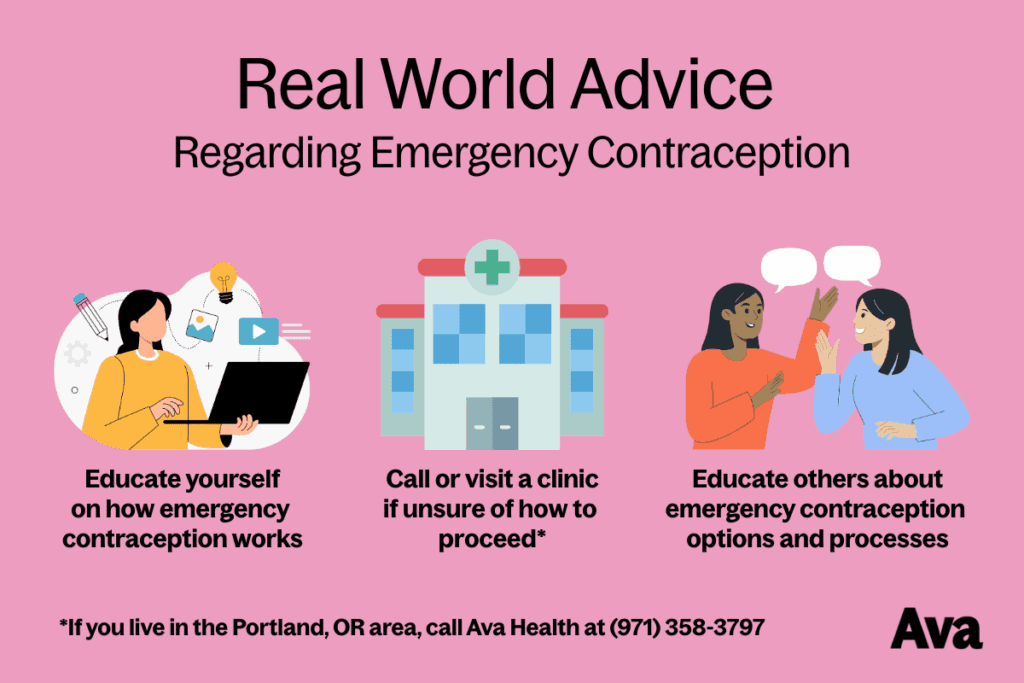
- Educate yourself on how EC works so you can avoid emergency situations as best as possible, and if you find yourself in one, you can take educated actions for your reproductive health.
- Call or visit a clinic if uncertain which method suits you best.
- Educate friends or partners, so they also know the types, pros, cons, and questions that come with popular methods of EC.
Conclusion
Emergency contraception is a powerful option in your reproductive health journey. While it’s not perfect, when used correctly and promptly, it can significantly reduce the risk of unintended pregnancy. Understanding how it works, as well as its limitations, can help you to make more educated decisions about yourself, your actions, and your future.
If you have questions or discover that you’re pregnant, please reach out to a trusted provider—Ava Health is here to support you with free, confidential, early pregnancy care.
Note: This blog post is for informational purposes only and does not constitute medical advice. Ava Health does not refer for or perform abortions. All medical information is accurate at the time of publishing this blog.
Sources
Centers for Disease Control and Prevention. U.S. Selected Practice Recommendations for Contraceptive Use, 2024: Emergency Contraception. Centers for Disease Control and Prevention, 2024, www.cdc.gov/contraception/hcp/usspr/emergency-contraception.html.
“Emergency Contraception.” Office on Women’s Health, U.S. Department of Health and Human Services, 4 June 2024, www.womenshealth.gov/a-z-topics/emergency-contraception.
Trussell, James, et al. “Emergency Contraceptive Pills: A Simple Proposal to Reduce Unintended Pregnancies.” Contraception, vol. 84, no. 4, 2011, pp. 322–325, www.sciencedirect.com/science/article/pii/S1472648310601137.
Fine, Paul, et al. “Ulipristal Acetate—A Review of Efficacy and Safety.” Contraception Journal, Elsevier, 2023, www.contraceptionjournal.org/article/S0010-7824(23)00011-2/fulltext.
UpToDate. “Emergency Contraception: Mechanisms, Efficacy, and Safety.” Edited by Mary F. Cwiak, Wolters Kluwer, 2024, www.uptodate.com/contents/5475.
Ava Health. Reproductive Health Services and Education. Ava Health, 2025, www.avahealthpdx.org.