What is an IUD? Birth Control Explained in Simple Terms
- Medically Reviewed
- Last Updated
If you’re exploring birth control options, you’ve probably heard about the IUD, or intrauterine device. This small, T-shaped device is placed inside the uterus to help prevent pregnancy. IUDs are one of the most effective reversible birth control methods available, and they’re growing in popularity because they can last for years without daily upkeep.
In this guide, we’ll explain what an IUD is, how it works, the different types available, potential benefits and risks, and the questions to ask before making a decision.
What Is an IUD?
An IUD (intrauterine device) is a small piece of flexible plastic shaped like the letter “T.” A healthcare provider inserts it into the uterus to prevent pregnancy.
There are two main types of IUDs:
- Hormonal IUDs – release a small amount of progestin hormone into the uterus.
- Copper IUDs – contain copper wire wrapped around the stem of the device.
Both types are considered long-acting reversible contraception (LARC), meaning they can work for several years but can be removed at any time if you decide you want to become pregnant or switch methods.
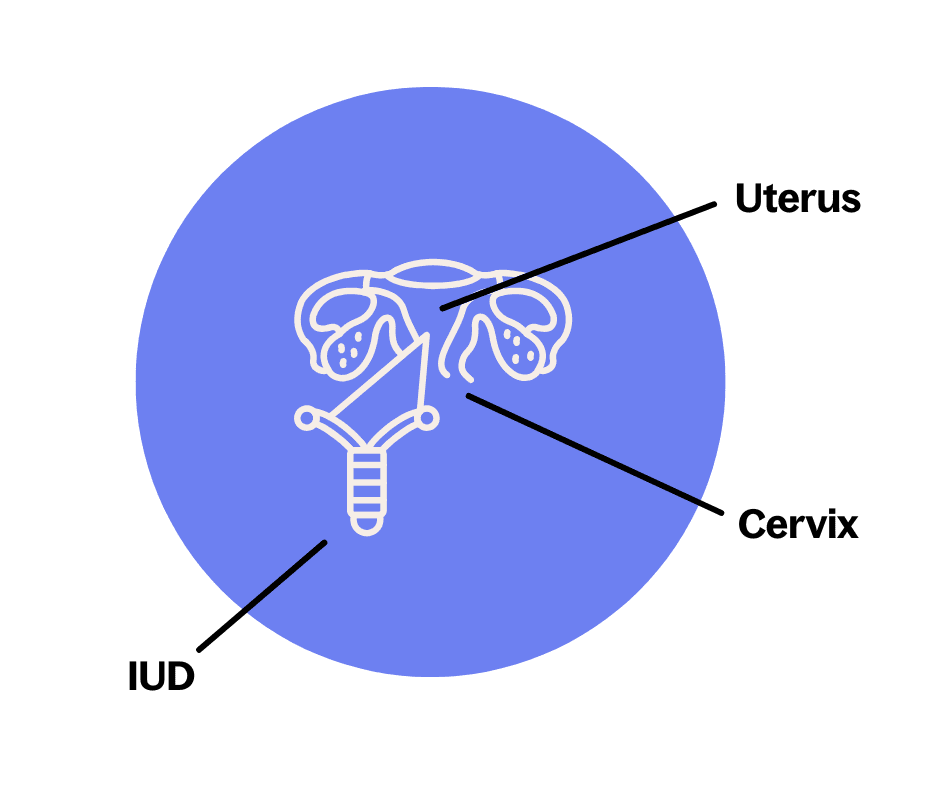
How Does an IUD Work for Birth Control?
Hormonal IUDs work mainly by thickening cervical mucus, which makes it harder for sperm to reach an egg. They may also thin the lining of the uterus, which could prevent implantation.
Copper IUDs don’t use hormones. Instead, the copper creates an environment that’s toxic to sperm, stopping them from reaching an egg.
Effectiveness: Both types are over 99% effective, meaning fewer than 1 in 100 women using an IUD will become pregnant in a year.
Types of IUDs Explained
Brand Names | Hormonal or Copper | FDA-Approved Duration | |
| Mirena | Hormonal | 8 years |
| Kyleena | Hormonal | 5 years |
| Skyla | Hormonal | 3 years |
| Liletta
| Hormonal | 8 years |
| ParaGard | Copper | 10 years |
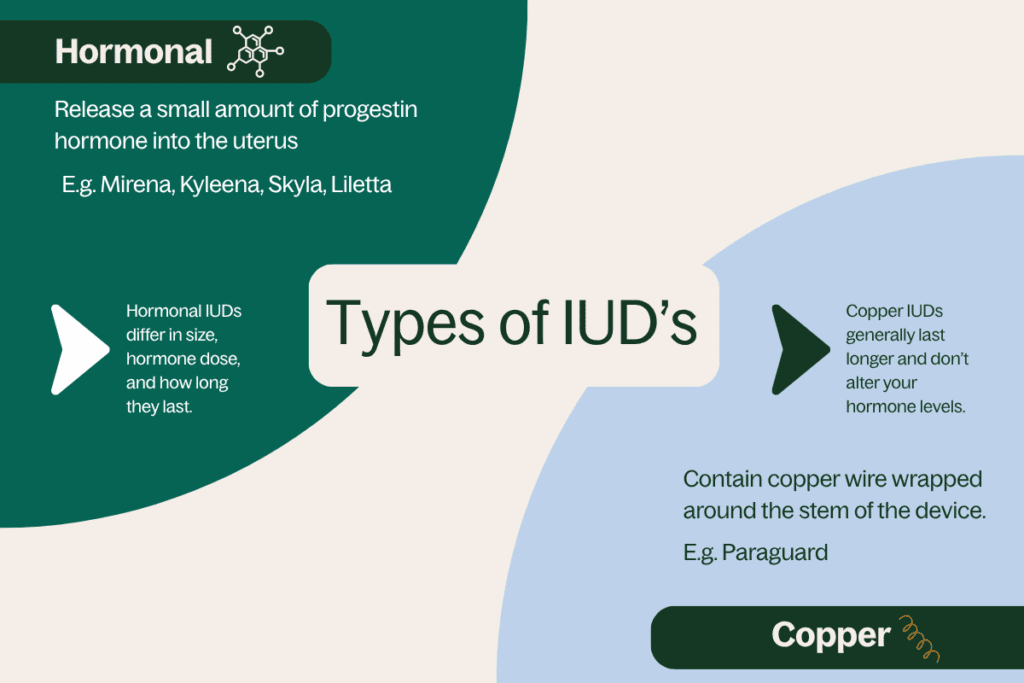
Hormonal IUDs differ in size, hormone dose, and how long they last.
Copper IUDs generally last longer and don’t alter your hormone levels.
Benefits of Using an IUD
An IUD can offer several advantages:
- Long-term protection – Works for 3–10 years depending on the type.
- Low maintenance – No daily pills or monthly refills.
- Highly effective – Among the most reliable reversible methods.
- Discreet – No visible signs you’re using birth control.
- Reversible – Fertility typically returns quickly after removal.
- Potential non-contraceptive benefits – Hormonal IUDs may reduce heavy periods and menstrual cramps.
Possible Side Effects and Risks
While most people use IUDs without serious problems, potential side effects include:
- Cramping or discomfort during and after insertion
- Irregular bleeding or spotting (especially in the first few months)
- Heavier periods with a copper IUD
- Hormonal changes (mood swings, acne, breast tenderness) with hormonal IUDs
- Rare risks:
- Expulsion (the IUD coming out)
- Uterine perforation during insertion
- Pelvic infection shortly after placement
If you experience severe pain, heavy bleeding, fever, or cannot feel the IUD strings, contact a healthcare provider promptly.
Why do women choose an IUD?
- Highly effective, long-term birth control option
- Low maintenance contraception
- It’s a reversible method with quick return to fertility
- Hormonal IUD may lighten heavy periods
- Does not contain estrogen like some birth control pills, patches, or rings
Why do women avoid using an IUD?
- If they have certain uterine abnormalities or large fibroids
- If they have an active pelvic infection
- If they experience unexplained vaginal bleeding that hasn’t been evaluated
- If they are allergic to copper (for copper IUDs) or sensitive to hormonal methods (for hormonal IUDs)
- If they are uncomfortable with the idea of an in-office insertion procedure
IUD vs. Other Birth Control Methods
Method | Effectiveness | Maintenance | Reversibility | STI Protection |
IUD | 99%+ | None after insertion | Immediate | No |
Birth control pill | 91% (typical) | Daily pill | Immediate | No |
Implant | 99%+ | None after insertion | Immediate | No |
Condom | 85% (typical) | Every time you have sex | Immediate | Yes |
91% (typical) | Weekly change | Immediate | No | |
~77–98% | Daily tracking | Immediate | No |
To learn more about birth control methods, see What are the different types of birth control?
What to Expect During an IUD Insertion
- Consultation – The provider will review medical history and discuss options.
- Insertion appointment – The procedure usually takes less than 10 minutes.
- Aftercare – Mild cramping or spotting is normal for a few days.
- Follow-up – Some providers recommend a check-up after the next period to confirm placement.
IUD Removal and Fertility Afterward
Removal is typically quick and straightforward. Most women can try for pregnancy immediately after removal, and fertility usually returns within the first menstrual cycle.
Common Myths About IUDs
Myth: Only women who’ve had children can get an IUD.
Fact: IUDs are safe for most women, including those who haven’t had children.
Myth: IUD insertion is unbearably painful.
Fact: Pain levels vary. Many describe it as strong cramping for a few minutes.
Myth: IUDs cause infertility.
Fact: IUDs do not cause infertility; fertility typically returns quickly after removal.
Frequently Asked Questions
Q: Can an IUD protect against STIs?
A: No. Use condoms to reduce the risk of sexually transmitted infections.
Q: Can I feel my IUD?
A: You shouldn’t feel it, but you can check the strings occasionally to confirm placement.
Q: What if I can’t find the strings?
A: Contact your healthcare provider; the IUD may still be in place, but it’s best to confirm.
Final Thoughts
At Ava Health, we believe women deserve clear, balanced, and trustworthy information to make decisions about their health. An IUD can be a safe and effective birth control option for many, but it may not be the right choice for everyone. Like any medical decision, it involves weighing the benefits, possible side effects, and how it aligns with your personal values, health needs, and lifestyle.
Our goal is not to tell you what choice to make but to ensure you feel informed. We encourage you to consider both the practical and ethical aspects of birth control, and to take time to reflect on what matters most to you. The best next step is to have an open, honest conversation with a healthcare provider you trust—someone who can listen to your concerns, respect your values, and help you make a decision that feels right for you.
Note: This blog post is for informational purposes only and does not constitute medical advice. Ava Health does not refer for or perform abortions. All medical information is accurate at the time of publishing this blog.

Sources:
- Centers for Disease Control and Prevention (CDC). U.S. Selected Practice Recommendations for Contraceptive Use, 2024. Centers for Disease Control and Prevention, 2024, https://www.cdc.gov/contraception/hcp/usspr/?CDC_AAref_Val=https://www.cdc.gov/reproductivehealth/contraception/mmwr/spr/summary.html.
- American College of Obstetricians and Gynecologists (ACOG). Long-Acting Reversible Contraception (LARC): Intrauterine Device (IUD) and Implant. ACOG, 2023, https://www.acog.org/womens-health/faqs/long-acting-reversible-contraception-iud-and-implant.
- Mayo Clinic Staff. Hormonal IUD (Mirena). Mayo Clinic, 2024, https://www.mayoclinic.org/tests-procedures/mirena/about/pac-20391354.
- World Health Organization (WHO). Family Planning/Contraception Methods. World Health Organization, 2023, https://www.who.int/news-room/fact-sheets/detail/family-planning-contraception.
- Office on Women’s Health (U.S. Department of Health and Human Services). Birth Control Methods. WomensHealth.gov, 2024, https://www.womenshealth.gov/a-z-topics/birth-control-methods.
Share this Blog
Disclaimer: The content on this site is for informational purposes only and does not constitute medical advice. Ava Health does not refer for or perform abortions. All medical information is accurate at the time of publishing.
Medically Reviewed By:

Anka Radutiu, BSN, RN
Other Articles You Might Be Interested In
What is Pelvic Inflammatory Disease (PID) and How is it Caused?