
What is the difference between birth control and Plan B?
- Medically Reviewed
- Last Updated
Want to know if you’re pregnant?
Schedule an appointment with Ava for a free pregnancy test and know for sure.
What are the different types of birth control?
Birth control, or contraceptives, refers to intentionally preventing pregnancy using various methods.
These include hormonal options—like oral pills, patches, injections, vaginal rings, implants, and IUDs—as well as barrier methods, sterilization, and behavioral strategies.
Key Methods and Effectiveness
According to the CDC and WHO, contraceptive effectiveness for typical vs perfect use includes:
- Combination pill: ~9% failure typical, ~0.3% perfect
- Progestogen-only pill: ~13% typical, ~1.1% perfect
- IUDs (hormonal or copper): 0.2%–0.8% typical
These methods aim to:
- Suppress ovulation
- Thicken cervical mucus
- Thin uterine lining to reduce implantation chances
How Plan B Works
Plan B is a branded form of emergency contraception—often referred to as the “morning-after pill.”
It contains a high dose of levonorgestrel, a synthetic progestin, and is meant for one-time use after unprotected sex—or contraceptive failure—within a short window of time.
It works primarily by delaying or inhibiting ovulation so there’s no egg available for fertilization
Important limitations:
- Does not prevent fertilization or implantation if an egg is already fertilized
- Not effective if the user is already pregnant
Timeframe for Effectiveness
- Must be taken within 72 hours of unprotected intercourse—sooner is better Some types (like Ella, containing ulipristal acetate) work up to 5 days after, though Plan B is levonorgestrel-only
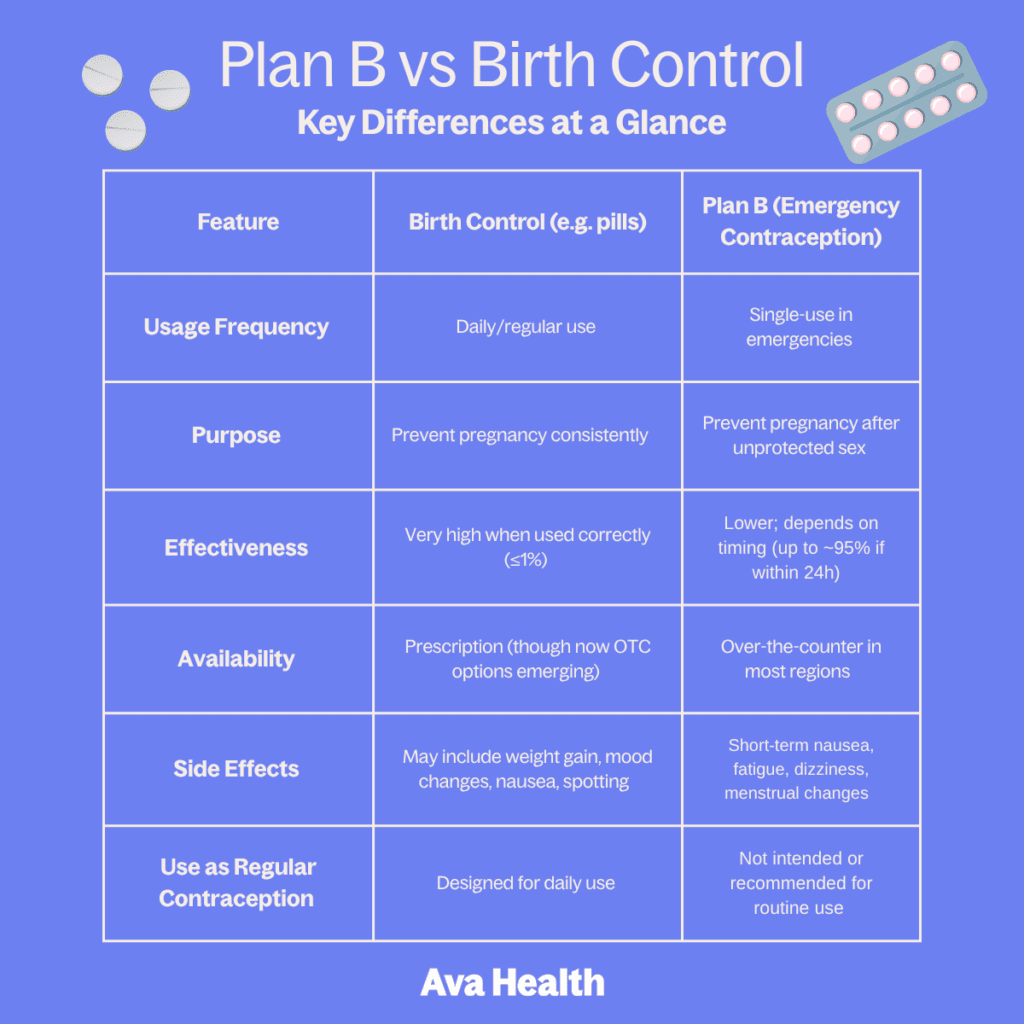
Key differences of Plan B vs Birth Control
Where can I get birth control or Plan B?
- Birth control pills usually require a prescription, though OTC options like Opill—a progestin-only minipill—have recently become available, boosting accessibility
- Plan B and similar levonorgestrel emergency contraception products are widely available OTC in the U.S. without need for a prescription or age restrictions
What is the effectiveness of plan B vs birth control?
- Routine birth control (e.g., pills, IUDs) offers superior protection when used correctly: <1% failure for perfect use (IUDs, implants), and slightly higher with typical use
- Emergency contraception (Plan B) reduces risk of pregnancy by around 89% when taken within 3 days; effectiveness drops over time
- If taken within 24 hours, emergency contraception can reach up to 95% effectiveness; but still, it’s less reliable than regular contraceptives
What are the side effects of birth control vs plan B?
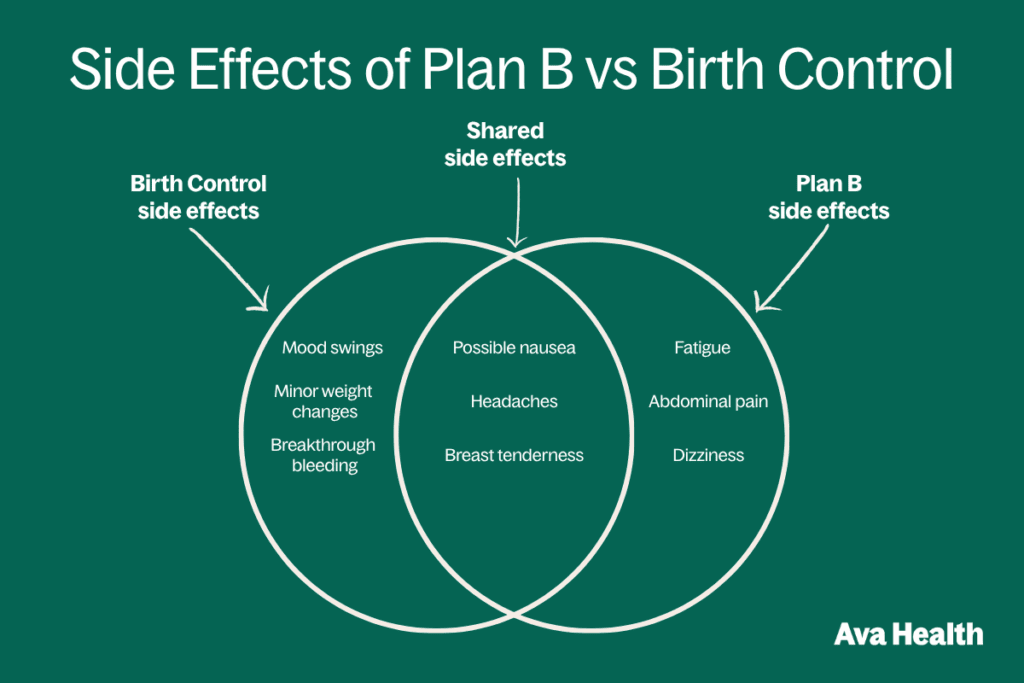
Both methods are generally safe but have differing side effect profiles:
- Birth control pills: possible nausea, headaches, mood swings, breast tenderness, minor weight changes, breakthrough bleeding—all often temporary
- Plan B: nausea, abdominal pain, fatigue, headache, dizziness, breast tenderness—typically short-lived and resolves within a day
- Frequent use of EC may disrupt menstrual cycle regularity and is not recommended as a primary contraceptive method. If you find yourself needing frequent use of EC, see What are the different types of Birth Control for other, safer long-term options for preventing pregnancy.
Can I just take plan B instead of birth control?
No. Plan B should never replace routine contraception. It’s a backup method, not a substitute. It’s less convenient, less effective for repeated use, and lacks consistency in protection.
If you find yourself needing EC more than 2–3 times a year, it’s wise to discuss long-term contraception options—like the pill, IUD, or implant—with a healthcare provider. See What are the different types of Birth Control for more information.
Summary & Conclusion
Birth control encompasses a wide range of methods designed for consistent, proactive pregnancy prevention, many of which offer extremely high effectiveness when used correctly.
Plan B, on the other hand, is an emergency, single-use option meant for situations where regular contraception failed or wasn’t used. It is less effective than routine methods, only available in a short window after intercourse, and not suited for repeated, ongoing use.
In summary:
- Use birth control for regular, ongoing contraception.
- Use Plan B only in emergencies—and as soon as possible.
- Consider long-term methods if EC is needed more than 2-3 times per year.
Note: This blog post is for informational purposes only and does not constitute medical advice. Ava Health does not refer for or perform abortions. All medical information is accurate at the time of publishing this blog.
Sources:
Centers for Disease Control and Prevention. Contraception and Birth Control Methods. CDC, 2024, https://www.cdc.gov/contraception/?CDC_AAref_Val=https://www.cdc.gov/reproductivehealth/contraception/index.htm
World Health Organization. Family Planning/Contraception Methods. WHO, 2024, https://www.who.int/news-room/fact-sheets/detail/family-planning-contraception.
- American Pregnancy Association. Types of Birth Control. American Pregnancy Association, 2024, https://americanpregnancy.org/unplanned-pregnancy/birth-control-pills-patches-and-devices/types-of-birth-control/.
Cleveland Clinic. Morning-After Pill: Emergency Contraception & How It Works. Cleveland Clinic, 2024, https://my.clevelandclinic.org/health/treatments/23386-morning-after-pill.
Share this Blog
Disclaimer: The content on this site is for informational purposes only and does not constitute medical advice. Ava Health does not refer for or perform abortions. All medical information is accurate at the time of publishing.
Medically Reviewed By:

Anka Radutiu, BSN, RN
Other Articles You Might Be Interested In


I Think I Might Be Pregnant: What to Do Before You Take a Test