
- Ava Health
It’s completely natural to feel a bit anxious or unsure about visiting an STD clinic. You’re doing the right thing by seeking information and preparing ahead of time. You’re not alone—and you do have choices. Whatever has brought you to this point, you are worthy of care, respect, and peace of mind.
Table of Contents
What to Know Before You Visit the Clinic
Understanding your “why”
Your first step is recognizing that visiting a clinic for sexually transmitted infection (STI) or sexually transmitted disease (STD) testing is a step towards being more holistically educated about your health and choices. Whether you’re asking “When should I get tested?”, “What tests do I need?”, or “What does the visit look like?”, knowing what to expect helps reduce fear and gives you the information you need to make decisions that align with your values.
Key terminology to know
- STD / STI: You’ll often see both terms. “STI” (infection) is sometimes used to emphasize early-stage infections (which may be asymptomatic). “STD” emphasizes the disease stage or untreated consequences.
- Screening vs diagnosis: Screening means testing even if you don’t have symptoms. The Centers for Disease Control and Prevention (CDC) recommends screening because many infections show no symptoms.
- Confidential vs anonymous: Most clinics offer confidentiality (your name and information kept private) rather than completely anonymous testing. Make sure to ask how your data is handled.
- Window period: Some infections may not show on tests immediately after exposure. Your clinic should tell you how long to wait for accurate results.
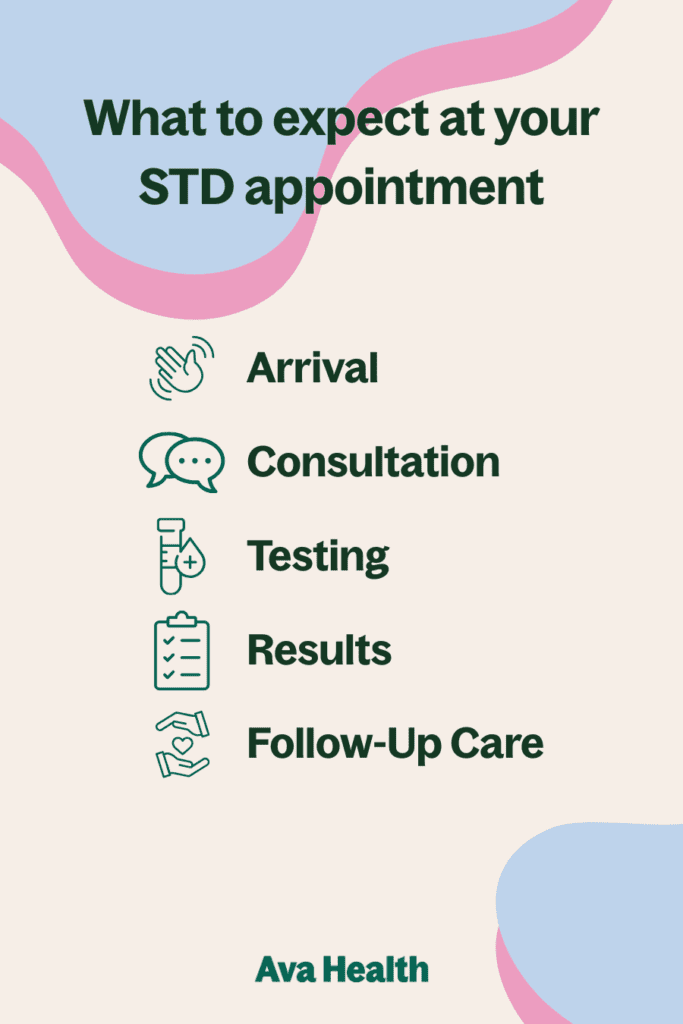
What an STD clinic visit often involves
At a trusted clinic like Ava Health, you can expect:
- A safe, judgment-free environment.
- Discussion of your sexual history in a private setting (to help determine which tests are needed).
- One or more of: a urine test,/or vaginal/penile/throat/rectal swabs, and/or blood tests. Please note that Ava Health only offers testing for those who can give a vaginal self-swab. We are happy to refer you to many reputable testing places that offers other testing options.
- Clear instructions about when to expect results, how you’ll be notified, and what treatment (if needed) will look like.
- An opportunity to ask questions: about prevention, treatment, partner notification, and follow-up testing.
Why you should be looking for more than just “a test”
A good STD clinic isn’t just about running a panel and giving you results. Here are markers of quality:
- Comprehensive testing options (for chlamydia, gonorrhea, syphilis, HIV, hepatitis, etc) and an honest discussion about what they don’t test (so nothing is hidden).
- Clear explanation of the process and a timeline for results. Many people dread waiting without knowing when or how they’ll hear back. Your clinic should be able to give you a timeline of when you’ll hear about your test results.
- Treatment or referral: If a test comes back positive, the clinic should help you get treatment or refer you appropriately.
- Supportive environment: Staff who treat you with respect, maintain your confidentiality, and answer your questions without judgement.
- Follow-up care: Even if results are negative, you may need retesting (depending on exposure) and prevention education.
- Transparency about cost and insurance: Many clinics offer free or sliding-scale services. At Ava Health our STI services are free and no insurance is required.
What You Should Be Looking For At Your STD Clinic
Below is a detailed checklist of things to look for — think of it as your personal guide to making sure your visit gives you what you deserve: clear results, dignity, and empowerment.
1. Confidential STI screening and treatment
Look for language that emphasizes confidentiality and respect. If the website or front desk focuses on judgment-free care, that’s a good sign.
Ask:
- Will my information be kept strictly private?
- How will I receive my results (phone, patient portal, in person)?
- Who sees my records?
2. Location, hours, and accessibility
- Does the clinic have convenient hours (evenings, weekends)?
- Is it easy to get to (public transit, parking, safe neighborhood)?
- Is walk-in testing available, or are all appointments required? Please note that Ava Health requires a screening call to ensure we can complete testing before you walk in to our clinic.
- Is the cost clearly described? If free, is it truly free (no hidden fees)?
- Does the clinic provide specific directions for each location?
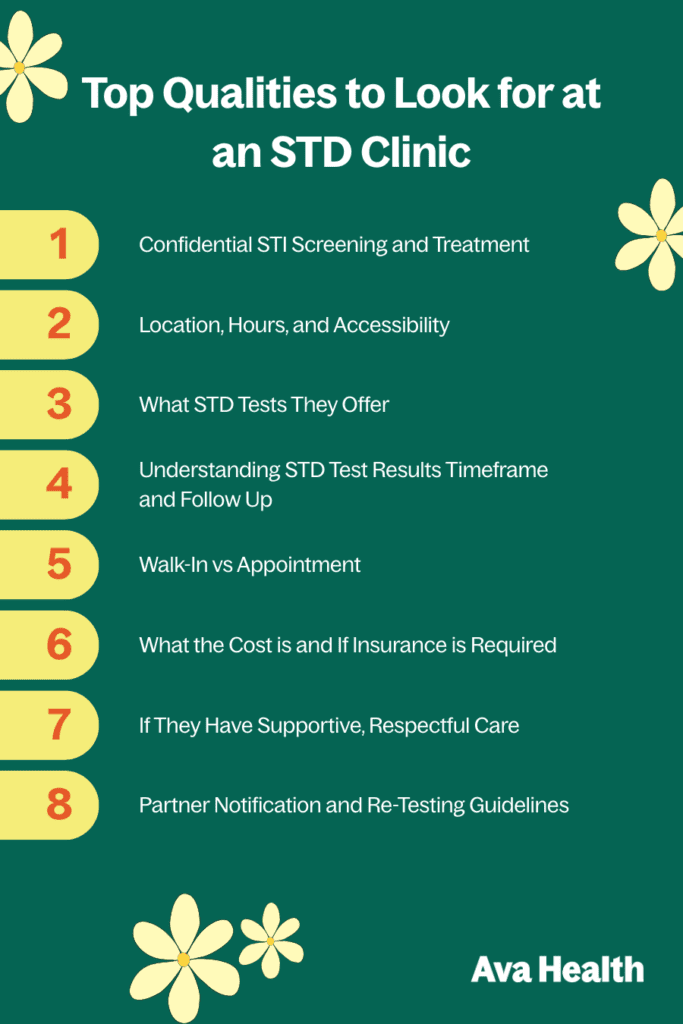
3. What STD tests they offer
Before you go (or during your visit), ask which infections they test for and which you may need based on your history.
Key infections:
- Chlamydia & gonorrhea (common, often asymptomatic)
- Syphilis
- HIV
- Hepatitis B & C
- Herpes (HSV-1/2)
- Other site-specific tests (throat, rectal) depending on your sexual practices
- Ask: “When should I get tested after exposure?”
- Also ask: Which tests are included in the fee? Are there optional add-ons (that may cost extra)?
4. Understanding STD test results timeframe and follow up
Knowing how long you’ll wait for results and what happens next is critical.
- Does the clinic tell you a typical turnaround time?
- What happens if a test is positive? Ask: Does the clinic provide treatment? Will I need to return? How is partner notification handled?
- What happens if the result is negative? Do they offer retesting guidance?
5. Walk in vs appointment – what to expect
Some clinics allow walk-ins, others require scheduled visits. You’ll want to know:
- Do I need to call ahead? Ava Health encourages making an appointment online or over the phone.
- What is the typical wait or appointment duration?
- Are there separate areas for testing and treatment? Comfortable waiting rooms?
- What if I’m nervous or have questions—can I talk to a nurse first? We offer an online nurse chat for all your questions and concerns. Text a nurse today!
6. What the cost is and if insurance is required
Cost (or lack of it) can be a barrier. Look for clinics that clearly state free or low cost.
- Does the clinic explicitly say or are willing to disclose what their rates are?
- Are there any hidden fees (treatment, follow-up visits)?
- Does the clinic accept Medicaid / sliding scale if you pay?
- Are services inclusive (e.g., for minors, LGBTQ+ individuals, different gender identities)?
7. If they have supportive, respectful care
Going in with anxiety or worry about judgment is normal. A good clinic will help you feel safe.
- Do reviews from past patients describe the staff well?
- Do they offer educational resources (about risks, prevention, what an infection means)?
- Are they respectful of your choices, identity, and concerns?
- Is there an environment of trust and confidentiality?
8. Partner notification and re-testing guidelines
- If your test is positive, does the clinic help you understand how to notify past partners?
- Do they provide guidance on when and how your partners should get tested?
- Do they give you guidance on when to re-test (for example after treatment or new exposures)?
Why It Matters – The Bigger Picture of Sexual Health
Taking the time to choose the right clinic and ask the right questions is not just about one test. It connects to your broader sexual health, future, and well-being.
- Many STIs (including chlamydia and gonorrhea) often have no symptoms. 75 % of women who are infected with chlamydia do not know they have it.
- Untreated STIs can lead to long-term health consequences such as pelvic inflammatory disease (PID), infertility, ectopic pregnancy, chronic pelvic pain.
- Early detection means easier treatment, fewer complications, and less risk of spreading infection to partners.
- Regular screening should be a part of your routine if you are sexually active with multiple partners — this is respectful to your body as well as your partners.
- Choosing a clinic that supports you restores dignity and strengthens your capacity to make informed choices.
Reflection – How to Pause, Think & Choose What’s Right for You
It’s okay to take a moment before you walk in. Here are a few reflective questions:
- How comfortable do I feel with the clinic’s front-desk or website language?
- Which tests do I need, and what’s the timeline?
- Will I be able to get my results in a timeframe that works for me? Will I understand what they mean?
- If results are positive, is there a clear plan for treatment and partner support?
- Do I feel respected and safe in the clinic environment? If I have questions or concerns, will I be heard?
- Do I have enough time to prepare (no rush, no surprise fees, and realistic expectations)?
- After the visit, how will I follow up — with prevention, retesting, partner discussion, or further care?
In the quiet moment before you go, remind yourself: you are doing this to protect your health, your future, and your peace of mind. You are worthy of care. You are making the responsible choice.
Support & Next Steps
If you’re ready, you can take the next step by contacting a local, trustworthy clinic. Ava Health provides free, confidential STD testing and treatment for those assigned female at birth in the Portland area.
You might want to schedule an appointment, or call ahead and ask some of the questions above. It’s completely valid to call and say: “I’m considering STD testing—can you tell me which tests you offer, cost (if any), how long results take, and whether treatment is provided here (or referral)?”
If you feel anxious beforehand, consider bringing a trusted friend (if comfortable), writing down your questions ahead of time, or using the clinic’s online nurse-chat if available.
When the visit is done, remember to ask for a clear explanation of your results, any next steps (especially if everything is negative), and follow-up plans. Even when the result is negative, you might want to ask: When should I get tested again? What prevention steps should I take now?
You’re doing something courageous by showing up for your health. You deserve dignity, clarity, and support through this process. You’re not alone—and you don’t have to figure it all out by yourself.
Share this Blog
Disclaimer: The content on this site is for informational purposes only and does not constitute medical advice. Ava Health does not refer for or perform abortions. All medical information is accurate at the time of publishing.
Other Articles You Might Be Interested In

Implantation Bleeding vs. Your Period: Understanding the Difference