
What is Perimenopause: Symptoms + Treatment
- Medically Reviewed
- Last Updated
It’s okay if you’re feeling uncertain about what’s happening in your body. Maybe your cycles have changed, your sleep feels different, or your emotions seem less predictable. You might be wondering — is this normal?
You’re not alone. Many women begin noticing subtle shifts years before menopause officially begins. This stage is called perimenopause, and understanding it can help you feel more grounded, confident, and cared for during this natural transition.
Table of Contents
What Is Perimenopause?
Perimenopause literally means “around menopause.” It’s the time leading up to menopause, when the ovaries gradually produce less estrogen and progesterone — two hormones that influence everything from your menstrual cycle to your mood, sleep, and bone health.
While menopause is defined as going 12 consecutive months without a period, perimenopause can last anywhere from 2 to 10 years. Most women begin experiencing changes in their 40s, but some notice symptoms as early as their mid-30s.
It’s not an illness or a problem — it’s a transition. Your body is gently adjusting to a new rhythm, even if it doesn’t always feel gentle.
Early Signs of Perimenopause
Every woman’s experience is unique, but the earliest signs often appear in small, noticeable shifts. These may include:
- Changes in menstrual cycle: Shorter or longer cycles, heavier or lighter flow, or skipped periods.
- Hot flashes and night sweats: Sudden warmth or sweating that can disrupt sleep.
- Mood changes: Increased irritability, anxiety, or emotional sensitivity.
- Sleep difficulties: Trouble falling asleep or staying asleep.
- Vaginal dryness or discomfort: Due to lower estrogen levels.
- Decreased libido: Shifts in hormone balance can affect desire and comfort.
- Brain fog: Difficulty concentrating or remembering details.
- Breast tenderness or bloating: Similar to premenstrual symptoms but more frequent.
These signs may come and go, changing in intensity over time. The unpredictability itself can be one of the hardest parts — but knowledge truly brings comfort.
Why Hormones Change During Perimenopause
To understand what’s happening, it helps to know that estrogen and progesterone are produced by the ovaries and fluctuate throughout a woman’s life. During perimenopause, these hormones no longer follow the steady pattern they once did.
Some months, estrogen levels may spike higher than usual, causing mood swings or heavy periods. Other months, they drop suddenly, leading to hot flashes or fatigue. Progesterone, the hormone that helps regulate sleep and calm the nervous system, also declines, which can contribute to anxiety and restlessness.
These shifts are part of the body’s natural progression — but when symptoms interfere with daily life, it’s worth exploring treatment options that can help you feel balanced again.
Common Perimenopause Symptoms and What They Mean
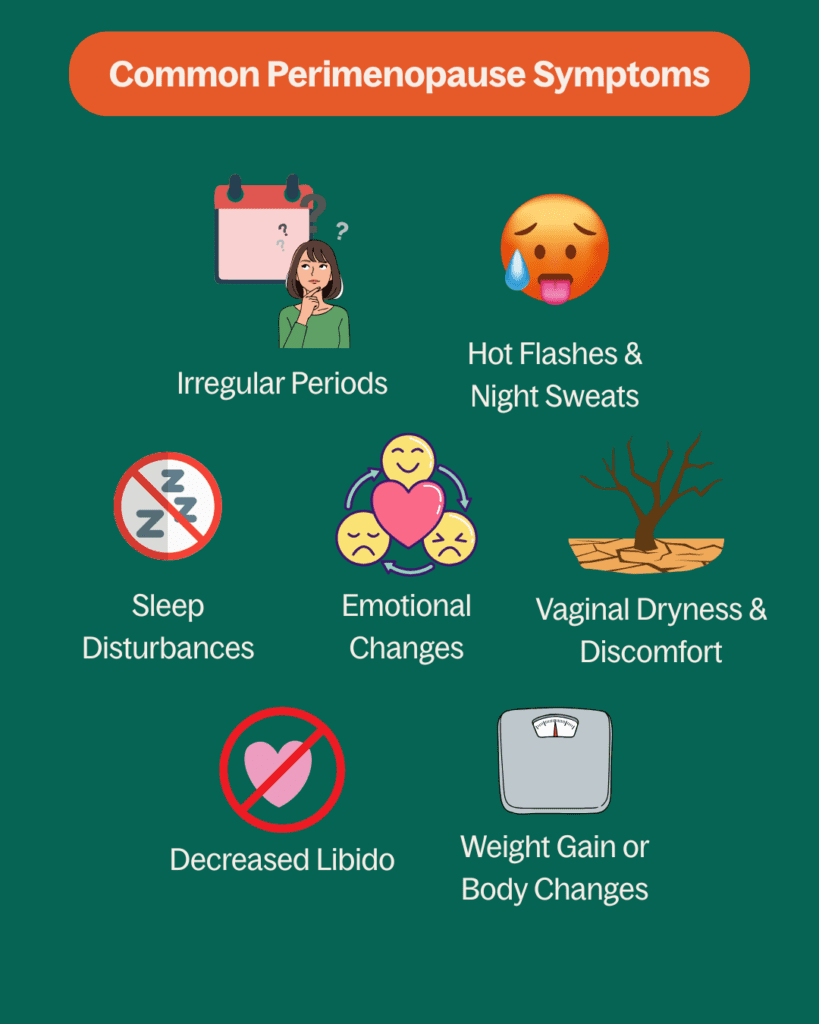
1 . Irregular Periods
As ovulation becomes less predictable, periods can become shorter, longer, heavier, or lighter. Skipping a month (or several) is common. If bleeding becomes unusually heavy or frequent, it’s wise to check with your healthcare provider to rule out other conditions such as fibroids or thyroid imbalance.
2. Hot Flashes and Night Sweats
These sudden waves of heat are caused by changes in how the brain regulates temperature. Keeping your environment cool, dressing in breathable layers, and avoiding caffeine or alcohol can help minimize episodes.
3. Sleep Disturbances
Fluctuating hormones can interrupt your natural sleep cycle. Establishing a calming bedtime routine, limiting screen time, and supporting relaxation with gentle minerals like magnesium or chamomile can make a difference.
4. Emotional Changes
Many women describe feeling more anxious or irritable during perimenopause. This isn’t “just in your head.” Estrogen affects neurotransmitters like serotonin and dopamine — the chemicals that support mood balance. Mindfulness, counseling, and hormonal support can all help restore emotional steadiness.
5. Vaginal Dryness and Discomfort
As estrogen levels decline, vaginal tissues become thinner and produce less natural moisture. Using a natural, water-based moisturizer or low-dose vaginal estrogen (as prescribed) can relieve discomfort and make intimacy more comfortable.
6. Decreased Libido
Changes in hormones, mood, and vaginal comfort can affect sexual desire. Addressing dryness, improving sleep, and managing stress can help restore a sense of connection and pleasure.
7. Weight Gain or Body Changes
Metabolism slows as estrogen declines, and muscle mass may decrease. A balanced diet, strength training, and consistent movement can help maintain energy and body composition.
When Does Perimenopause End?
Perimenopause ends when you’ve gone 12 months without a menstrual period. At that point, you’re considered to be in menopause. The average age for menopause in the U.S. is 51, though it can happen earlier or later.
The good news: while perimenopause can be challenging, most symptoms ease once the body reaches hormonal stability after menopause.
Natural Ways to Manage Perimenopause Symptoms
Many women prefer to start with lifestyle and natural remedies before exploring medical treatments. These gentle approaches can support hormone balance and overall well-being.
- Nourish Your Body with Balanced Nutrition
Focus on foods rich in calcium, magnesium, and plant-based estrogens (phytoestrogens), such as soy, flaxseeds, and lentils.
Avoid processed sugar and refined carbs, which can intensify mood swings and fatigue.
Hydrate well and include omega-3 fats (from salmon, chia seeds, or walnuts) to support brain and heart health.
- Move Your Body Regularly
Exercise helps regulate hormones, improve sleep, and boost mood. Aim for a combination of strength training, stretching, and gentle cardio — like walking, swimming, or yoga.
- Prioritize Rest and Stress Relief
Sleep quality often decreases during perimenopause, so creating a peaceful bedtime routine is essential. Try herbal teas, warm baths, or guided meditation to help your body relax naturally.
Managing stress through prayer, journaling, or time in nature supports both mental and physical balance.
- Support Hormone Health with Supplements
Certain vitamins and herbs — such as black cohosh, evening primrose oil, B vitamins, and magnesium — can ease symptoms for some women. Always consult your healthcare provider before starting new supplements to ensure they’re safe for your needs.
- Stay Hydrated and Limit Triggers
Caffeine, spicy foods, and alcohol can worsen hot flashes and night sweats. Keeping a simple journal to track what triggers your symptoms can help you make small changes that bring big relief.
Medical Treatments for Perimenopause Symptoms
If natural methods aren’t enough, several medical options can offer effective relief.
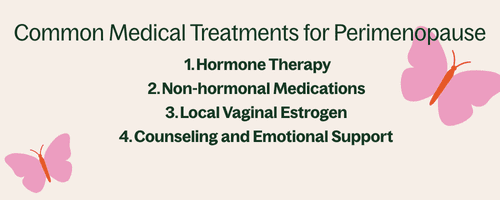
- Hormone Therapy (HT)
Low-dose hormone therapy can replace the estrogen your body is producing less of, easing hot flashes, mood swings, and vaginal dryness. It’s available as pills, patches, gels, or creams.
For many women, short-term use during the most symptomatic years provides significant comfort.
- Non-Hormonal Medications
If hormone therapy isn’t right for you, other options like antidepressants (SSRIs), gabapentin, or clonidine can reduce hot flashes and mood changes.
- Local Vaginal Estrogen
For dryness or discomfort, local estrogen in cream or tablet form can restore moisture without affecting the whole body.
- Counseling and Emotional Support
Perimenopause isn’t only a physical transition — it’s an emotional one. Talking with a trusted counselor or joining a women’s support group can bring connection and encouragement.
The Connection Between Perimenopause and Mental Health
Many women describe feeling “off” — more anxious, sad, or overwhelmed — during this season. Fluctuating estrogen can influence neurotransmitters that regulate mood, making emotional changes a normal part of the process.
You’re not losing yourself. You’re moving through a transformation that affects every layer of your being. Seeking support, whether through therapy, spiritual care, or community, is a sign of strength, not weakness.
When to Talk to a Healthcare Provider
While perimenopause is a normal transition, certain symptoms deserve medical attention:
- Periods that are very heavy or prolonged
- Bleeding between periods or after intimacy
- Hot flashes that disrupt sleep or daily activities
- Mood changes that affect your ability to cope
- Painful intercourse or pelvic discomfort
A clinician can help rule out other conditions and guide you toward safe, effective treatments.
Life After Perimenopause: A Time of Renewal
As hormones settle into their new balance, many women discover a renewed sense of clarity and freedom. The unpredictability of perimenopause gives way to a steadier rhythm, and with it often comes a deeper understanding of your body.
This new chapter can be a season of empowerment — one where you know yourself more fully and care for yourself more gently.
A healthy lifestyle and meaningful relationships are powerful allies as you step into this next stage.
Reflection: Listening to Your Body
Pause for a moment. Notice what your body has been telling you lately — the fatigue, the warmth, the change in rhythm. Each message is an invitation to listen and care more deeply for yourself.
You don’t have to rush this process. Take time to ask questions, gather knowledge, and rest in the truth that your body is doing exactly what it’s meant to do.
Share this Blog
Disclaimer: The content on this site is for informational purposes only and does not constitute medical advice. Ava Health does not refer for or perform abortions. All medical information is accurate at the time of publishing.
Medically Reviewed By:

Ava Health
Other Articles You Might Be Interested In


I Think I Might Be Pregnant: What to Do Before You Take a Test