- Ava Health
It’s completely understandable if you’re feeling unsure, overwhelmed, or even a little anxious as you navigate changes in your body. You’re taking a brave and meaningful step by looking for information about what’s going on — and you’re not alone. This season of life may feel unfamiliar, but there is clarity, community, and care waiting for you.
Table of Contents
What to Know: Understanding Menopause and Its Symptoms
What is menopause (and perimenopause)?
Menopause is a natural transition that occurs when a woman has not had a period for 12 consecutive months and is no longer able to become pregnant naturally.
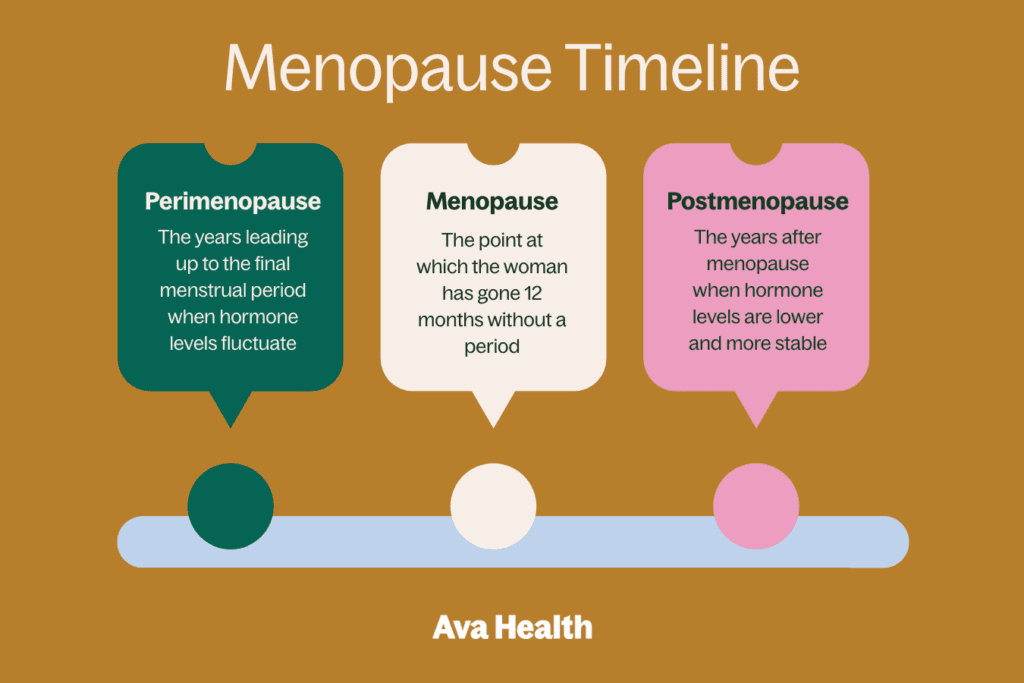
The journey typically includes three stages:
- Perimenopause (the years leading up to the final menstrual period when hormone levels fluctuate)
- Menopause (the point at which the woman has gone 12 months without a period)
- Postmenopause (the years after menopause) when hormone levels are lower and more stable.
Because hormone changes are happening gradually, many of the signs and symptoms begin during perimenopause and may continue into postmenopause.
Why do symptoms happen?
As you transition through perimenopause into menopause, the ovaries gradually produce less estrogen and progesterone. These hormonal shifts can affect many systems: the nervous system, cardiovascular system, bones, skin, mood, sleep, and more.
Hormone fluctuations and lower steady-state levels can trigger a wide variety of physical, emotional, and cognitive symptoms.
Key Symptoms of Menopause: What to Look For
Every woman’s experience is unique — you may have many of these symptoms, some of them, or even only mild changes. The important thing is that you pay attention to what your body and mind are telling you.
1. Hot flashes and night sweats
One of the hallmark symptoms: sudden warmth spreading through the upper body (face, neck, chest), often followed by sweating or chills. These may wake you at night (night sweats), disrupting sleep.
2. Irregular periods and changes in bleeding
During perimenopause you may notice your periods become shorter or longer, heavier or lighter, or more erratic before they stop altogether.
3. Sleep disturbances
Hormonal shifts — combined with hot flashes, night sweats, mood changes — often mean trouble getting to sleep, staying asleep, or waking feeling refreshed.
4. Mood changes, irritability, anxiety & depression
You might feel more emotional, experience unexpected sadness, irritability, or anxiety. These changes may be triggered by hormones, but also by life transitions occurring in mid-life.
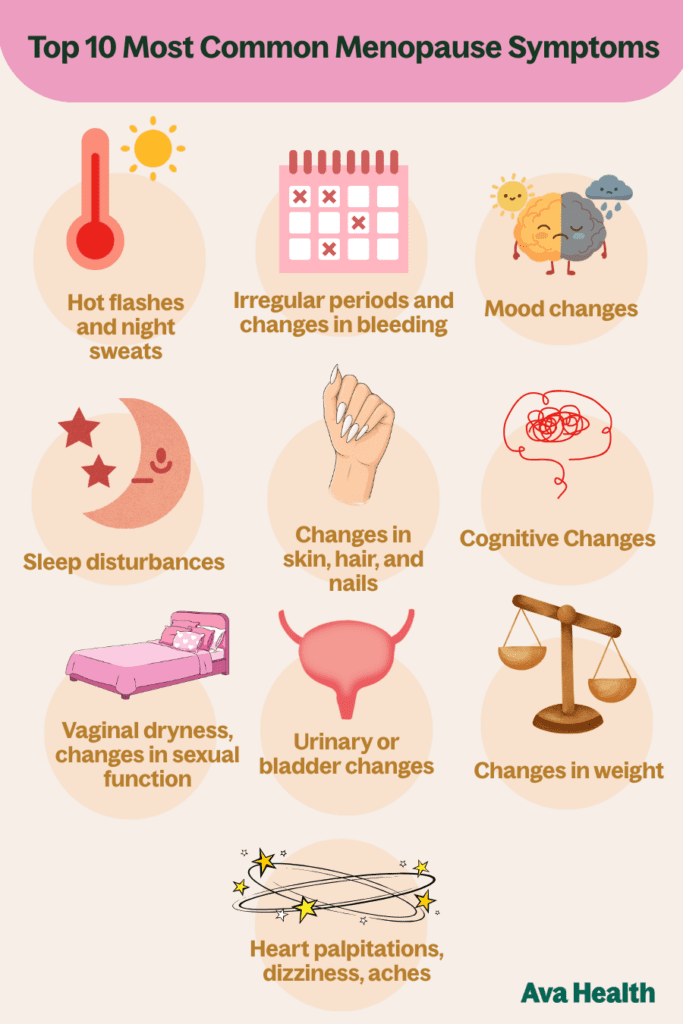
5. Cognitive changes: “brain fog”, memory lapses, trouble concentrating
Many women report experiencing a fogginess, forgetfulness, trouble focusing, or slower processing speed.
6. Vaginal dryness, changes in sexual function & libido
Declining estrogen can reduce vaginal moisture, elasticity, and comfort, which may lead to painful intercourse (dyspareunia) or lower libido.
7. Changes in weight, fat distribution, muscle and bone
You may notice weight gain (especially around the abdomen), muscle or joint aches, and there’s also an increased risk of bone loss (osteoporosis) and changes in cardiovascular health.
8. Changes in skin, hair, nails
Thinning hair, hair loss, scalp irritation, changes in skin texture, dryness, and nails that are more brittle can all accompany menopause
9. Urinary or bladder changes
Some women experience urinary incontinence or more frequent urinary tract infections due to changes in the urogenital tissues.
10. Heart palpitations, dizziness, joint/muscle aches
Some less commonly discussed symptoms: palpitations, feeling your heart race or skip, joint aches, muscle fatigue
How Long Do Symptoms Last?
There’s no one-size-fits-all timeline. Some women transition relatively smoothly, others face symptoms for many years.
- Many symptoms begin during perimenopause (which can last 2-10 years according to some studies).
- Postmenopausal symptoms may continue for years, especially if hormone levels remain low and changes (e.g., bone density, cardiovascular risks) begin to emerge.
Recognizing that this may be a longer chapter, rather than a quick upheaval, can help you set realistic expectations and seek support proactively.
Why Early Recognition and Support Matter
Understanding and addressing menopausal symptoms early isn’t just about comfort — it’s about long‐term health. Lower estrogen levels are associated with increased risks of:
- Bone loss / osteoporosis
- Cardiovascular disease
- Possible impacts on cognition and mental health
When you recognize symptoms, you have more options for treatment, lifestyle changes, and preventative care.
What You Can Do: Practical Strategies & Support
Here are some life-affirming, practical suggestions you can explore—even before or alongside formal treatment discussions.
Self-care & lifestyle adjustments
- Prioritize sleep: create a consistent bedtime routine, keep your sleep environment cool and dark, limit caffeine/alcohol close to bedtime.
- Nutrition: eat a balanced diet rich in calcium, vitamin D, lean protein, whole grains, fruits & vegetables.
- Exercise: regular weight-bearing exercise supports bone health and helps manage weight, mood, and sleep.
- Stress management: mindfulness, yoga, gentle movement, deep breathing can help reduce symptom burden and support mood.
- Hydration and skin/hair care: topical creams, gentle skincare, hair care can help with dryness and hair changes.
- Prepare your environment: dress in layers to help manage hot flashes, keep a fan nearby, and anticipate night sweats with breathable bedding.
When to see a healthcare provider
If symptoms are interfering with your quality of life (sleep loss, severe hot flashes, mood changes, pain, urinary issues), or you have risk factors (e.g., family history of osteoporosis or heart disease) — it’s wise to consult a clinician. Menopause Society or womenshealth.gov provides trusted information for patients.
Treatment options
Your provider may discuss:
- Hormone therapy (HT): replacing estrogen (and sometimes progesterone) may help many symptoms, though it must be tailored to individual risk.
- Non-hormonal medications: for hot flashes, mood, sleep, bone health.
- Complementary approaches: though evidence may vary, lifestyle and supportive therapies play a meaningful role.
A Holistic Perspective
You are more than the symptoms you may be experiencing. This transition is not a “problem to fix,” but a phase to understand, adapt to, and embrace so you can continue your story with strength, dignity, and purpose.
Your body is showing you that change is happening — that’s not a failure. It’s a natural unfolding. You still have seasons ahead of growth, rest, connection, and meaning. Your health and well-being matter deeply.
You deserve to feel supported and informed — and to walk into this next chapter with clarity and hope, not confusion or fear.
Reflection: What are you experiencing?
Take a moment to pause and ask yourself:
- Which symptoms are showing up for me?
- How are those affecting my daily life, my sleep, my mood, or relationships?
- What parts of lifestyle (sleep, movement, nutrition, stress) could I adjust or support more gently?
- Who can I talk with — a trusted friend, partner, clinician — about what I’m going through?
- What questions do I have for a provider if I choose to seek one?
You don’t have to figure all of this out at once. It’s totally okay to take your time.
Support & Next Steps
If you’d like help talking through your symptoms, exploring options, or finding local care, there are supportive places to turn. Whether it’s a trusted clinician, a support group, or simply an hour for self-reflection, you deserve a space where your experiences are heard and respected.
Share this Blog
Disclaimer: The content on this site is for informational purposes only and does not constitute medical advice. Ava Health does not refer for or perform abortions. All medical information is accurate at the time of publishing.
Other Articles You Might Be Interested In