- Ava Health
This is a common question.
Maybe you’re trying to be proactive about your health. Maybe you’re planning a pregnancy someday, but not right now. Or maybe someone handed you a bottle of prenatal vitamins and you’re wondering if it’s okay to take them “just in case.”
If you’ve found yourself asking, “Should I take prenatal vitamins even if I’m not pregnant?” you’re not alone. Many women want to support their bodies well, especially during seasons of change or uncertainty.
Table of Contents
What Are Prenatal Vitamins?
Prenatal vitamins are dietary supplements designed to support the nutritional needs of pregnancy. They contain many of the same vitamins and minerals found in regular multivitamins—but usually in different amounts.
Most prenatal vitamins include:
- Folic acid (or folate)
- Iron
- Calcium
- Vitamin D
- Iodine
- Vitamin B12
- Choline (in some formulations)
- DHA or omega-3s (in certain brands)
The purpose of prenatal vitamins is to help support early fetal development, especially during the first weeks of pregnancy—often before a woman even knows she’s pregnant.
According to the CDC, folic acid before and during early pregnancy helps reduce the risk of certain neural tube defects that develop very early in pregnancy.
Why Women Consider Taking Prenatal Vitamins When Not Pregnant
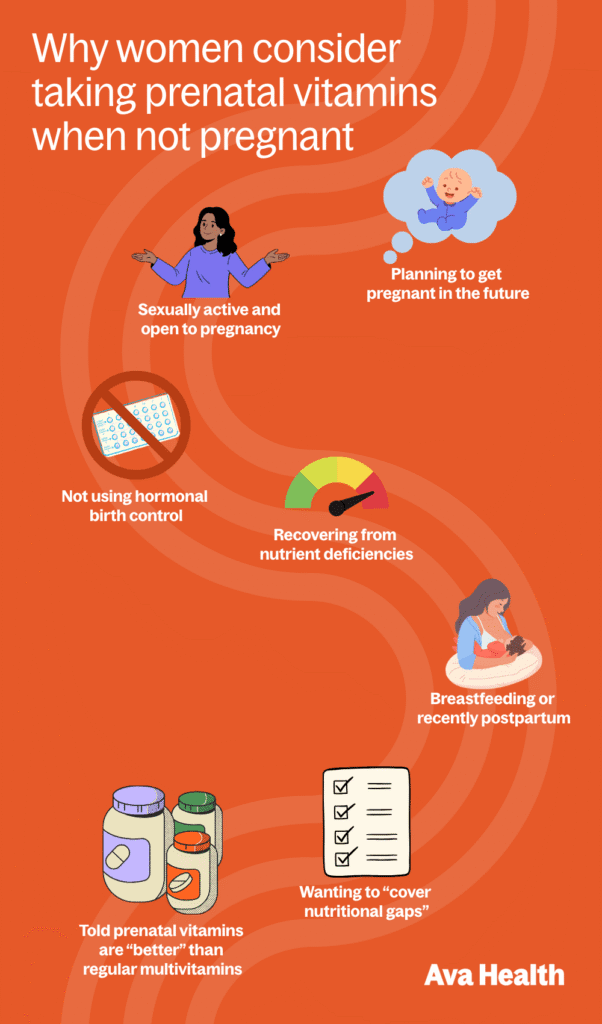
There are many reasons a woman might think about taking prenatal vitamins even when she’s not pregnant.
You might be:
- planning to get pregnant in the future
- sexually active and open to pregnancy
- not using hormonal birth control
- recovering from nutrient deficiencies
- breastfeeding or recently postpartum
- wanting to “cover nutritional gaps”
- told prenatal vitamins are “better” than regular multivitamins
Each of these situations deserves thoughtful consideration—there’s not a one-size-fits-all answer.
Is It Safe to Take Prenatal Vitamins If You’re Not Pregnant?
For most women, taking a prenatal vitamin when not pregnant is generally safe—but it is not always necessary.
Prenatal vitamins are not harmful by default. However, they are formulated for pregnancy, which means certain nutrients—especially iron and folic acid—are often included in higher amounts than the average non-pregnant woman needs.
This is why safety depends on:
- your individual health
- your diet
- your iron levels
- whether you’re planning for pregnancy or not
Potential Benefits of Prenatal Vitamins When Not Pregnant
1. Supporting Nutrient Stores Before Pregnancy
If pregnancy is a possibility—now or in the future—having adequate nutrient levels ahead of time can be helpful.
The American College of Obstetricians and Gynecologists (ACOG) recommends folic acid supplementation before pregnancy, because neural tube development happens very early.
This is one reason some providers suggest prenatal vitamins for women who could become pregnant, even if they aren’t actively trying.
2. Folic Acid and Reproductive Health
Folic acid isn’t only important during pregnancy. It also plays a role in:
- red blood cell formation
- DNA synthesis
- overall cellular health
Some women take prenatal vitamins specifically for folic acid support when not pregnant—especially if dietary intake is inconsistent.
3. Iron Support (When Needed)
Iron supports oxygen transport in the blood. Women who experience:
- heavy menstrual bleeding
- anemia
- low iron levels
may benefit from additional iron—but only if iron deficiency is present.
This is important: Too much iron can cause side effects, including constipation, nausea, and, in rare cases, iron overload.
4. Postpartum and Breastfeeding Support
If you’ve recently had a baby or are breastfeeding, some providers recommend continuing prenatal vitamins for a period of time. Nutrient needs can remain elevated during postpartum recovery and lactation.
Possible Downsides of Taking Prenatal Vitamins When Not Pregnant
While prenatal vitamins can be beneficial in certain situations, they’re not automatically the best choice for everyone.
1. Too Much Iron
Many prenatal vitamins contain 27 mg of iron, which is significantly more than what most non-pregnant women need.
Excess iron may cause:
- digestive discomfort
- constipation
- nausea
- abdominal pain
Women who don’t need extra iron may feel worse—not better—on prenatal vitamins.
2. Nutrient Imbalance
Prenatal vitamins focus on pregnancy needs, not general wellness. This means they may:
- lack certain nutrients included in standard multivitamins
- include higher doses that aren’t necessary long-term
More isn’t always better when it comes to supplements.
3. False Sense of Nutritional Security
Vitamins can support health—but they don’t replace:
- balanced meals
- adequate protein
- fruits and vegetables
- hydration
Prenatal vitamins are meant to supplement, not substitute, nourishment.
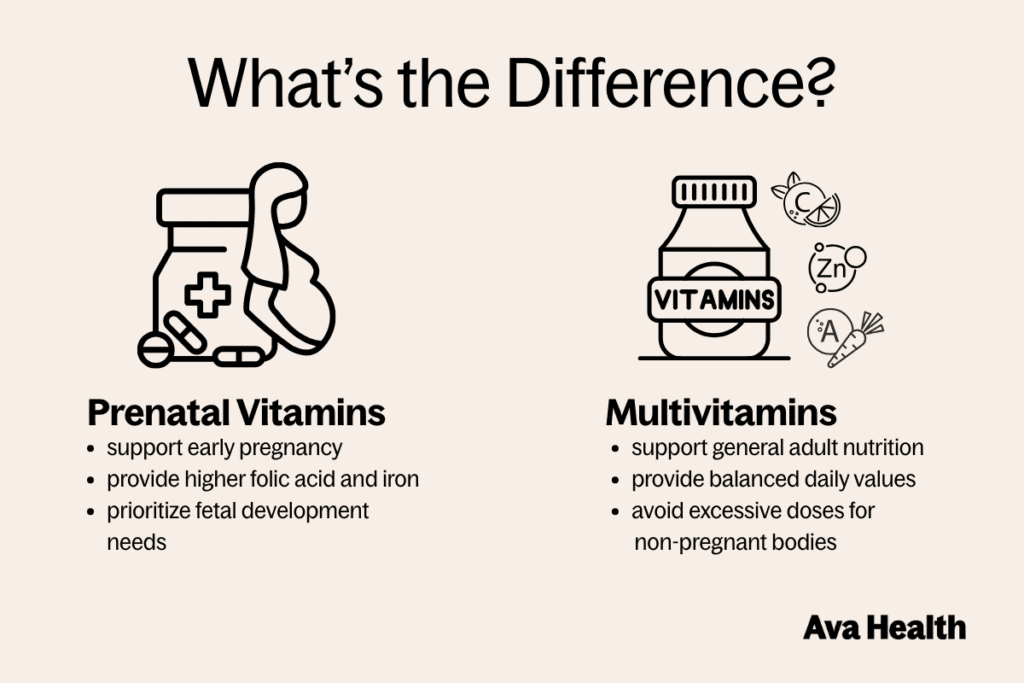
Prenatal Vitamins vs Multivitamins: What’s the Difference?
Prenatal vitamins are designed to:
- support early pregnancy
- provide higher folic acid and iron
- prioritize fetal development needs
Regular multivitamins are designed to:
- support general adult nutrition
- provide balanced daily values
- avoid excessive doses for non-pregnant bodies
If pregnancy isn’t planned or possible right now, a standard multivitamin may be a better fit for everyday use.
Should I Take Prenatal Vitamins If I Might Be Pregnant?
If pregnancy is possible—even if it’s unplanned—this is where prenatal vitamins may make sense.
Many women don’t realize they’re pregnant until several weeks in. During that time, early development is already happening.
If you’re:
- sexually active
- not using contraception consistently
- open to pregnancy
Taking a prenatal vitamin (or at least folic acid) may provide peace of mind and early nutritional support.
If you’re unsure whether you might be pregnant, these resources may help:
- Am I Pregnant? Signs, Symptoms, and Next Steps
https://avahealthpdx.org/am-i-pregnant/
- How Pregnancy Tests Work and When to Take One
https://avahealthpdx.org/how-pregnancy-tests-work/
What If I’m Not Trying to Get Pregnant at All?
If pregnancy isn’t something you’re planning or open to right now, prenatal vitamins are probably not necessary.
Alternatively, supporting your health can look like:
- choosing a regular multivitamin
- focusing on iron only if recommended
- prioritizing food-based nutrition
- addressing specific deficiencies with a provider
Prenatal Vitamins and Fertility: Do They Help?
Some women take prenatal vitamins hoping to improve fertility.
While adequate nutrition through balanced meals and hydration supports overall reproductive health, prenatal vitamins are not fertility treatments. They don’t guarantee pregnancy or correct underlying fertility challenges.
However, maintaining healthy nutrient levels—especially folate, iron, and B12—can support hormonal balance and overall wellness.
What to Look for If You Choose to Take Prenatal Vitamins
If you and your provider decide prenatal vitamins make sense for you, consider:
- Iron content (lower-iron options exist)
- Folate vs folic acid (some prefer methylfolate)
- Third-party testing
- Digestive tolerance
Not all prenatal vitamins are the same.
When to Talk to a Healthcare Provider
It’s especially important to talk with a provider if you:
- have anemia or iron disorders
- have digestive conditions
- take other supplements or medications
- feel fatigued or unwell on prenatal vitamins
If you don’t have access to regular care, free or low-cost pregnancy-related services may help you get answers:
Pregnancy Services Without Insurance
https://avahealthpdx.org/pregnancy-services-without-insurance-guide/
A Gentle Reminder About Your Body and Choice
Your body isn’t a problem to fix. It’s something to care for. And often, the best way is through focusing on nutrition through healthy meals and adequate hydration, and supplementing with vitamins when recommended or necessary.
Whether you take prenatal vitamins, a regular multivitamin, or no supplements at all, what matters most is that your choices are informed, supported, and pressure-free.
Take the time you need to research and ask questions, and trust yourself, with the support of medical professionals, to find the best path forward for you and your health.
Sources
Centers for Disease Control and Prevention. “Folic Acid.” Centers for Disease Control and Prevention, U.S. Department of Health and Human Services, 18 Apr. 2024, https://www.cdc.gov/folic-acid/about/index.html.
American College of Obstetricians and Gynecologists. “Nutrition During Pregnancy.” ACOG, Aug. 2023, https://www.acog.org/store/products/patient-education/pamphlets/pregnancy/nutrition-during-pregnancy.
National Institutes of Health, Office of Dietary Supplements. “Folate Fact Sheet for Health Professionals.” NIH, updated 2 June 2023, https://ods.od.nih.gov/factsheets/Folate-HealthProfessional/.
National Institutes of Health, Office of Dietary Supplements. “Iron Fact Sheet for Health Professionals.” NIH, updated 9 Feb. 2024, https://ods.od.nih.gov/factsheets/Iron-HealthProfessional/.
National Institutes of Health, Office of Dietary Supplements. “Vitamin B12 Fact Sheet for Health Professionals.” NIH, updated 2 June 2023, https://ods.od.nih.gov/factsheets/VitaminB12-HealthProfessional/.
National Institutes of Health, Office of Dietary Supplements. “Iodine Fact Sheet for Health Professionals.” NIH, updated 28 Mar. 2023, https://ods.od.nih.gov/factsheets/Iodine-HealthProfessional/.
Mayo Clinic Staff. “Prenatal Vitamins: Why They Matter, How to Choose.” Mayo Clinic, 9 Nov. 2022, https://www.mayoclinic.org/healthy-lifestyle/pregnancy-week-by-week/in-depth/prenatal-vitamins/art-20046945.
Share this Blog
Disclaimer: The content on this site is for informational purposes only and does not constitute medical advice. Ava Health does not refer for or perform abortions. All medical information is accurate at the time of publishing.
Other Articles You Might Be Interested In