- Ava Health
If you’re pregnant—or thinking about becoming pregnant—over the age of 35, you may have heard phrases like “advanced maternal age” or “high-risk pregnancy.” Those words can feel heavy, even alarming.
Being pregnant over 35 does not mean you did something wrong, or that you’ve waited too long. And it certainly does not mean you can’t have a healthy pregnancy or baby.
What it does mean is that your care may look a little more individualized—more attentive, more informed, and more supportive of your specific needs. And that can be a good thing.
This guide is here to walk you through what pregnancy over 35 really means, what risks are often discussed (and why), what support and testing options exist, and how to move forward with clarity and confidence.
Table of Contents
Why Is Pregnancy Over 35 Called “Advanced Maternal Age”?
The term advanced maternal age (AMA) is a medical classification used for pregnancies in women who will be 35 or older at the time of delivery.
This label exists because certain risks—statistically—begin to increase slightly after 35. It’s a population-level term, not a personal judgment.
Still, many people understandably dislike the phrase. It can feel judgemental or discouraging.
How Common Is Pregnancy Over Age 35?
Pregnancy over 35 is increasingly common.
According to the CDC, the recent birth rates for women ages 35–39 and 40–44 have steadily increased over the past several decades. Many women pursue education, careers, stability, or healing before starting or expanding their families—and that timing is valid.
Which means, you are actually not an outlier. You are part of a growing and supported group.
Can You Have a Healthy Pregnancy After 35?
Yes—many women have healthy pregnancies and births after age 35.
Age is just one factor among many that doctors look at when it comes to pregnancy. Overall health, access to prenatal care, nutrition, stress levels, and support systems all play important roles.
Modern prenatal care also allows providers to monitor pregnancies more closely and address concerns earlier than ever before.
Fertility After Age 35: What Changes?
Something people often worry about is also their fertility after 35. Here’s what’s helpful to know.
As women age:
- the number of available eggs gradually decreases
- egg quality may decline
- it may take longer to conceive
That said, many women conceive naturally after 35. Others may need more time or support.
If you’re trying to conceive and:
- have been trying for 6 months without success, or
- have irregular cycles, or
- have known reproductive conditions
a healthcare provider can help guide next steps.
Pregnancy Risks Over Age 35: Putting Them in Perspective
You may hear about increased risks with pregnancy over 35. It’s important to understand what that really means—and what it doesn’t.
Commonly Discussed Risks
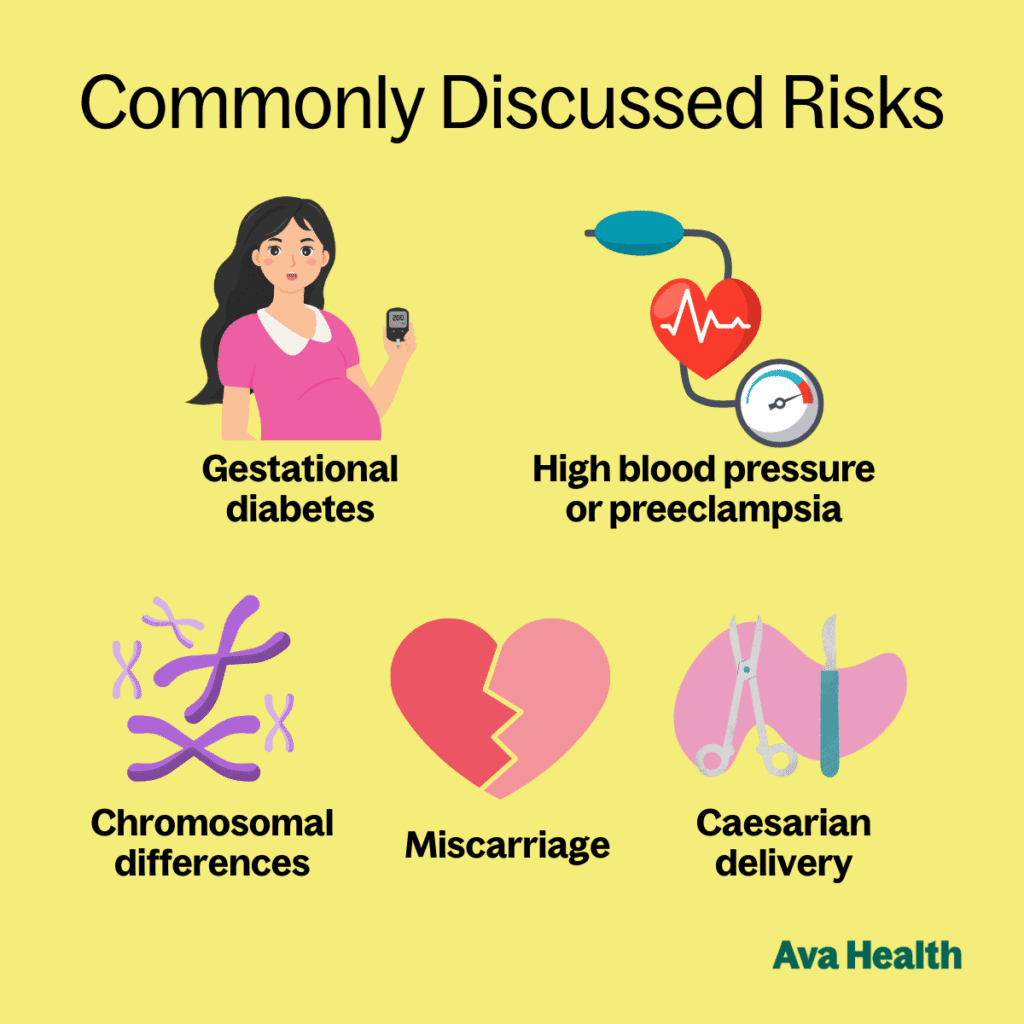
Statistically, pregnancy over 35 is associated with a higher likelihood of:
- gestational diabetes
- high blood pressure or preeclampsia
- chromosomal differences (such as Down syndrome)
- miscarriage
- cesarean delivery (C-section)
However, “increased risk” does not mean “likely” or “inevitable.” It means providers pay closer attention so concerns can be identified early.
Miscarriage Risk Over 35
Miscarriage risk does increase with age, largely due to chromosomal changes in eggs. Still, many pregnancies after 35 continue without complications.
If you’ve experienced a previous loss, you may be extra attentive to this.
We’re here to walk you through your next pregnancy steps, and if you’re unsure if you’re pregnant, your first step should be pregnancy confirmation:
- How Pregnancy Tests Work and When to Take One
https://avahealthpdx.org/how-pregnancy-tests-work/
- How Ultrasound Works in Pregnancy
https://avahealthpdx.org/how-ultrasound-works/
Genetic Screening and Testing Options
One benefit of having a pregnancy over 35 is access to more information.
Providers may offer or discuss:
- non-invasive prenatal testing (NIPT)
- first-trimester screening
- diagnostic tests like CVS or amniocentesis
These tests are optional. Their purpose is to provide information—not to pressure decisions.
You have the right to:
- ask questions
- decline testing
- take time to decide
This information should empower you, not confuse you.
Is Pregnancy Over 35 Automatically High-Risk?
Not necessarily.
Some providers classify pregnancies over 35 as “higher risk” for insurance or monitoring purposes, but many women over 35 have low-risk pregnancies overall.
Risk is based on the whole picture:
- medical history
- blood pressure
- blood sugar levels
- pregnancy progression
Prenatal Care for Pregnancy Over 35
Prenatal care for women over 35 may include:
- more frequent check-ins
- additional ultrasounds
- early screening for gestational diabetes
- closer blood pressure monitoring
This extra care isn’t about fear—it’s about support and prevention.
If access or cost is a concern, Ava Health offers guidance and services that may help:
- Pregnancy Services Without Insurance
https://avahealthpdx.org/pregnancy-services-without-insurance-guide/
Nutrition and Prenatal Vitamins After 35
Nutrition matters at every age—but supporting your body well can feel especially important during pregnancy over 35.
Prenatal vitamins typically include:
- folic acid
- iron
- calcium
- vitamin D
- iodine
If you’re not sure whether prenatal vitamins are right for you:
- Should I Take Prenatal Vitamins If I’m Not Pregnant?
https://avahealthpdx.org/prenatal-vitamins-not-pregnant/
Food, rest, hydration, and gentle movement are also essential forms of care.
Emotional Health and Pregnancy Over 35
Pregnancy, especially after 35, can come with some unique emotions:
- pressure to “get everything right”
- fear due to statistics or past experiences
- gratitude mixed with anxiety
All of this is normal.
It’s okay to feel hopeful and cautious at the same time. Remember, emotional support—whether through trusted people, counseling, or a supportive clinic—matters just as much during this time as physical care.
Birth Options After 35
Another common concern is whether pregnancy over 35 limits your birth options.
The answer: not automatically.
Many women over 35:
- labor naturally
- give birth vaginally
- work with midwives or OB-GYNs (or both)
- use a variety of pain-management options
Birth recommendations depend more on how pregnancy progresses than on age alone.
Common Myths About Pregnancy Over 35
Myth: Pregnancy over 35 is unsafe
Reality: Many women over 35 have healthy pregnancies and births.
Myth: You’ll definitely need a C-section
Reality: Cesarean (C-sections) rates may be slightly higher, but vaginal birth is still an option for many women pregnant over 35.
Myth: You waited too long
Reality: Many women over 35 have healthy pregnancies.
Questions to Ask Your Provider
Helpful questions include:
- How does my overall health affect my pregnancy risk?
- What screenings do you recommend—and why?
- What signs should I watch for between visits?
- How will we monitor blood pressure and glucose?
A good provider welcomes questions and honors your voice.
If You’re Still Deciding What to Do
If you’re early in pregnancy—or unsure how to move forward—getting accurate information can help you feel grounded.
Ava Health offers confidential, compassionate services:
- Free Pregnancy Testing and Ultrasound
https://avahealthpdx.org/free-pregnancy-ultrasound/
- Walk-In Pregnancy Clinics Near You
https://avahealthpdx.org/walk-in-pregnancy-clinics-near-you/
You deserve time, clarity, and care.
Closing Thoughts
Pregnancy over the age of 35 does not always mean “high risk” and does not mean you’re doing it wrong. There are lots of options for you, and statistically, many women over 35 have healthy pregnancies. Take a breath and remember that you’re not alone, and maybe start by giving us a call to confirm your pregnancy and your options moving forward.
Sources
American College of Obstetricians and Gynecologists. “Prenatal Genetic Screening Tests.” ACOG, 2023, https://www.acog.org/womens-health/faqs/prenatal-genetic-screening-tests.
American College of Obstetricians and Gynecologists. “Gestational Diabetes.” ACOG, 2022, https://www.acog.org/womens-health/faqs/gestational-diabetes.
American College of Obstetricians and Gynecologists. “Preeclampsia and High Blood Pressure During Pregnancy.” ACOG, 2023, https://www.acog.org/womens-health/faqs/preeclampsia-and-high-blood-pressure-during-pregnancy.
Centers for Disease Control and Prevention. “Births and Natality.” CDC, National Center for Health Statistics, 2023, https://www.cdc.gov/nchs/fastats/births.htm.
Centers for Disease Control and Prevention. “Pregnancy Complications.” CDC, 2023, https://www.cdc.gov/maternal-infant-health/pregnancy-complications/?CDC_AAref_Val=https://www.cdc.gov/reproductivehealth/maternalinfanthealth/pregnancy-complications.html.
Share this Blog
Disclaimer: The content on this site is for informational purposes only and does not constitute medical advice. Ava Health does not refer for or perform abortions. All medical information is accurate at the time of publishing.
Other Articles You Might Be Interested In