
In recent years, more women and couples have been exploring non-hormonal birth control options. Whether due to health concerns, religious beliefs, or a desire for a more natural lifestyle, one method continues to gain attention: Natural Family Planning (NFP), also known as the Fertility Awareness Method (FAM).
Natural family planning is a way to prevent or achieve pregnancy by tracking the natural signs of fertility in your menstrual cycle. Instead of relying on hormones or devices, NFP teaches you to understand your body’s patterns and signals.
In this article, we’ll cover:
- How natural family planning works
- Step-by-step cycle tracking
- Popular NFP methods
- Benefits and drawbacks
- Tips for success
- How effective NFP really is
What is Natural Family Planning?
Natural family planning is an umbrella term for birth control methods that rely on observing and recording signs of fertility. These signs can include:
- Basal body temperature (BBT) changes
- Cervical mucus patterns
- Menstrual cycle length
- Cervical position changes
By learning to identify your fertile days, you can avoid unprotected intercourse during that time to prevent pregnancy — or plan intimacy during those days if you’re trying to conceive.
How Natural Family Planning Works
Your menstrual cycle has two main phases:
- Follicular Phase (before ovulation) – Estrogen rises, leading to egg development.
- Luteal Phase (after ovulation) – Progesterone rises, preparing the body for a possible pregnancy.
Pregnancy can only occur if sperm meets an egg during the fertile window, which usually lasts about 6 days per cycle — the 5 days before ovulation and the day of ovulation itself.
NFP methods help you identify that fertile window so you can make informed decisions.
Popular Methods of Natural Family Planning
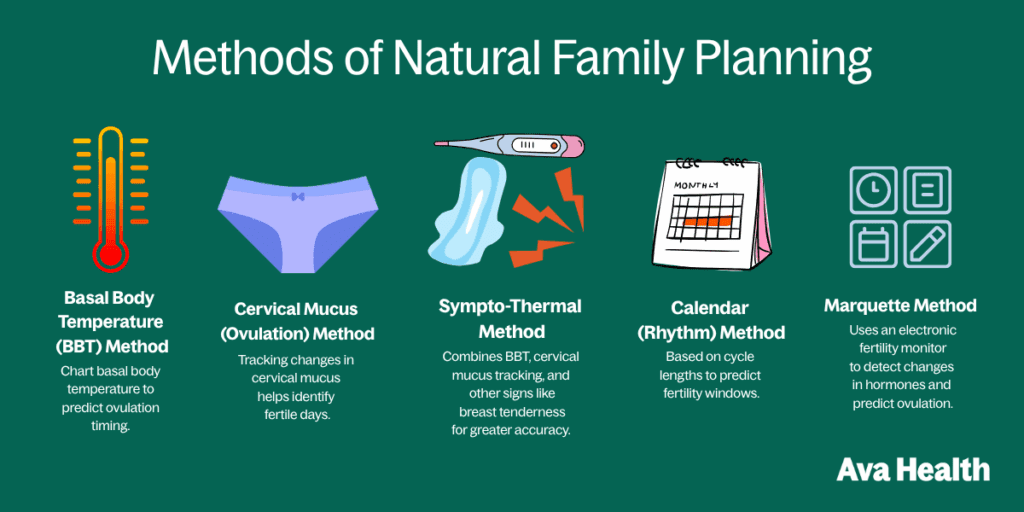
- Basal Body Temperature (BBT) Method
- You take your temperature every morning before getting out of bed.
- After ovulation, your BBT rises slightly (about 0.5°F) and stays elevated until your period.
- By charting these changes over time, you can predict when ovulation has occurred.
- Cervical Mucus (Ovulation) Method
- Cervical mucus changes throughout your cycle — from dry/sticky after menstruation to clear/stretchy (“egg white” consistency) just before ovulation.
- By noting these changes daily, you can identify your fertile days.
- Sympto-Thermal Method
- Combines BBT, cervical mucus tracking, and other signs like breast tenderness or ovulation pain.
- Considered one of the most effective NFP approaches when used correctly.
- Calendar (Rhythm) Method
- Based on past cycle lengths to predict future fertile windows.
- Less reliable if cycles are irregular.
- Marquette Method
- Uses hormone monitoring with a fertility monitor to detect changes in estrogen and LH (luteinizing hormone).
- Often combined with mucus or temperature tracking for higher accuracy.
Effectiveness of Natural Family Planning
When used perfectly, some NFP methods can be up to 98% effective at preventing pregnancy.
However, typical use effectiveness is closer to 77–88%, meaning 12–23 out of 100 women may become pregnant in a year.
Factors affecting success include:
- Consistency in tracking
- Understanding fertility signs
- Avoiding unprotected intercourse during fertile days
- Partner cooperation
Pros of Natural Family Planning
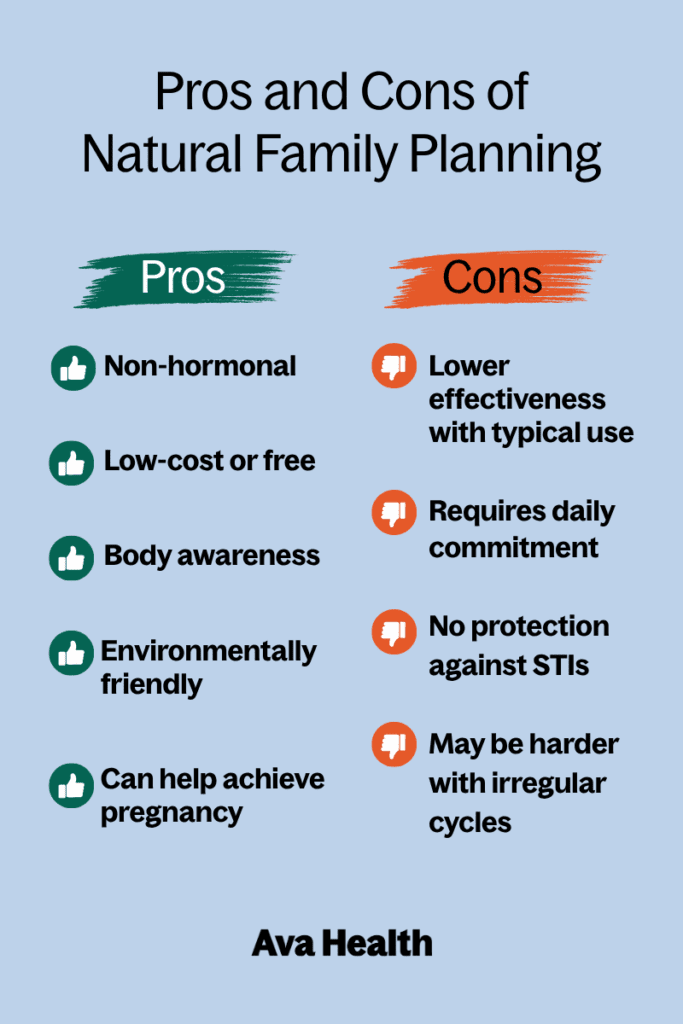
- Non-hormonal — No synthetic hormones or side effects.
- Low-cost or free — Once you learn the method, costs are minimal.
- Body awareness — Learn more about your reproductive health.
- Environmentally friendly — No waste from pills, patches, or devices.
- Can help achieve pregnancy — The same tracking used to avoid pregnancy can be used to conceive.
Cons of Natural Family Planning
- Lower effectiveness with typical use compared to hormonal methods.
- Requires daily commitment to tracking and observation.
- No protection against STIs — Condoms are still needed for STI prevention.
- May be harder with irregular cycles or during postpartum/breastfeeding.
Step-by-Step Guide: How to Track Your Cycle for Birth Control
- Learn your method – Read a book, take an online course, or find a certified instructor.
- Get your tools – Basal thermometer, fertility tracking app, or paper chart.
- Record daily signs – Temperature, mucus, and any other fertility indicators.
- Identify fertile days – Based on patterns and rules specific to your chosen method.
- Avoid unprotected sex – During your fertile window if preventing pregnancy.
Apps and Tools for Natural Family Planning
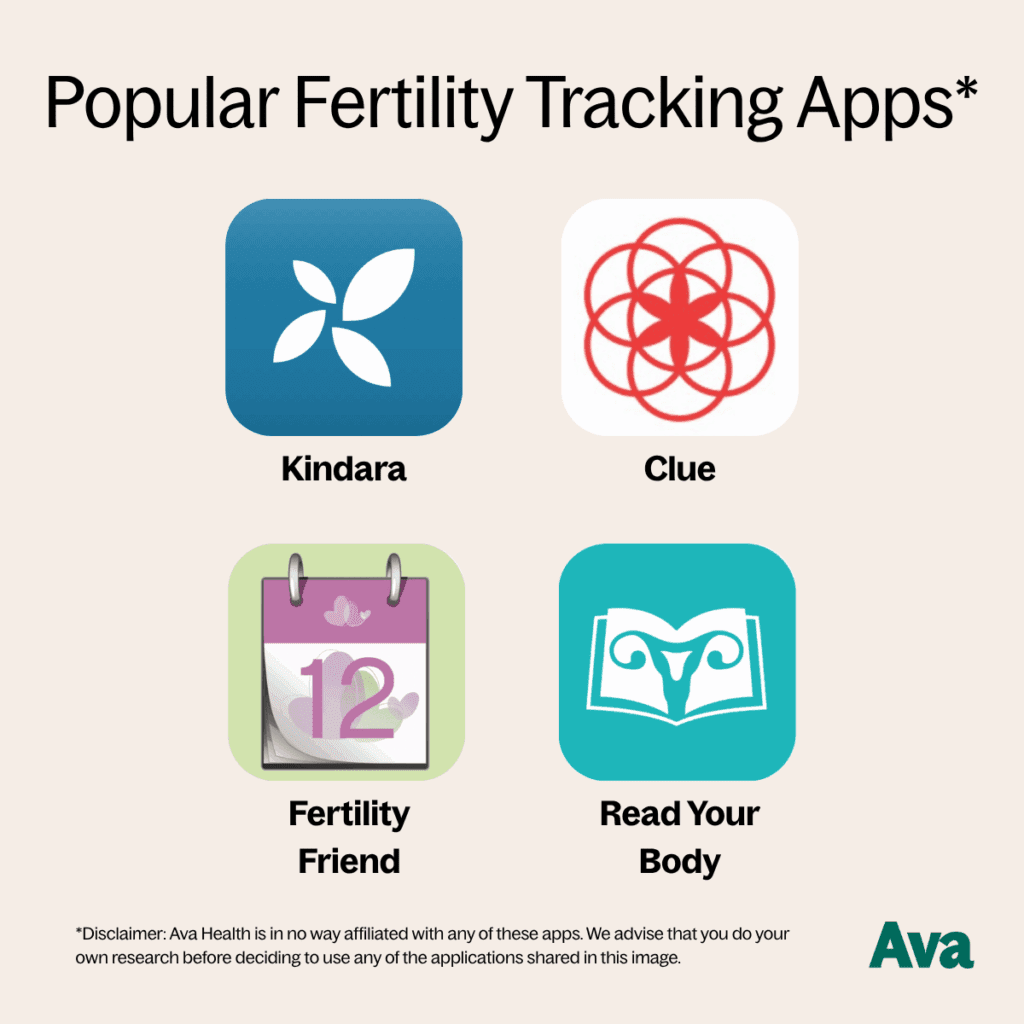
Popular fertility tracking apps include:
- Kindara
- Fertility Friend
- Clue
- Read Your Body
Some apps use algorithms to predict ovulation, but they are most effective when paired with real observations, not predictions alone.
Natural Family Planning for Different Life Stages
- Postpartum: NFP can be adapted for breastfeeding women, but cycles may be irregular.
- Perimenopause: Fertility patterns may change, requiring careful observation.
- Teen years: Best used with professional guidance due to irregular cycles.
Tips for Success with Natural Family Planning
- Commit to learning — Most failures occur due to misunderstanding the method.
- Track for several months before relying on NFP for pregnancy prevention.
- Communicate openly with your partner — Both should be on board.
- Be prepared with a backup method (like condoms) if unsure about fertility status.
Frequently Asked Questions
Q: Is natural family planning the same as the rhythm method?
A: No — the rhythm method relies solely on calendar predictions. NFP is more accurate because it uses real-time body signs.
Q: Can NFP work with irregular cycles?
A: Yes, but it requires more observation and may be less predictable.
Q: Is it safe for all women?
A: Most women can use NFP, but it’s best to consult a healthcare provider for personalized guidance.
Conclusion: Is Natural Family Planning Right for You?
Natural family planning offers a hormone-free, affordable, and empowering way to manage fertility. For those willing to commit to learning and tracking consistently, it can be a safe and effective birth control option.
However, it requires discipline, partner cooperation, and a willingness to avoid sex or use barriers on fertile days.
If you’re interested, consider working with a certified NFP instructor or a healthcare provider experienced in fertility awareness to ensure you understand the method fully.
If you are interested in other birth control methods, see What are the different types of Birth Control?
Note: This blog post is for informational purposes only and does not constitute medical advice. Ava Health does not refer for or perform abortions. All medical information is accurate at the time of publishing this blog.
Sources:
Mayo Clinic Staff. “Natural Family Planning.” Mayo Clinic, 12 Jan. 2024, https://www.mayoclinic.org/tests-procedures/natural-family-planning/about/pac-20385204.
Centers for Disease Control and Prevention (CDC). “Contraception and Birth Control Methods.” CDC Reproductive Health, 6 Aug. 2024, https://www.cdc.gov/contraception/about/index.html.
American College of Obstetricians and Gynecologists (ACOG). “Fertility Awareness-Based Methods of Family Planning.” ACOG, 2023, https://www.acog.org/womens-health/faqs/fertility-awareness-based-methods-of-family-planning.