- Ava Health
If you’re reading this, you may be feeling anxious, uncertain, or quietly afraid. You might be noticing changes in your body, experiencing symptoms that don’t feel right, or simply seeking information for peace of mind. Whatever brought you here, your concern is valid.
Pregnancy can come with many unfamiliar sensations, and it isn’t always easy to know what’s normal and what isn’t. Learning about miscarriage symptoms is not about expecting the worst—it’s about understanding your body and knowing when to seek care. You deserve clear, calm information and compassionate support as you navigate this moment.
Table of Contents
What Is a Miscarriage?
A miscarriage is the loss of a pregnancy before 20 weeks, most commonly in the first trimester. Many miscarriages occur very early, sometimes before a woman even knows she is pregnant.
Miscarriage is far more common than many realize, and it is almost never caused by something you did or didn’t do.
Things to Remember
- Most miscarriages happen due to chromosomal changes
- Everyday activities do not cause miscarriage
- Experiencing a miscarriage does not mean future pregnancies won’t be healthy
Understanding the symptoms can help you respond with care—not fear.
How Common Is Miscarriage?
Miscarriage occurs in approximately ¼ of known pregnancies. The actual number may be higher, as many happen before pregnancy is confirmed.
While common, miscarriage is still deeply personal. Statistics don’t lessen emotional impact—but they can help reduce isolation and self-blame.
Early Pregnancy Symptoms vs. Miscarriage Symptoms
One of the most difficult parts of early pregnancy is that normal pregnancy symptoms and miscarriage symptoms can overlap.
Some discomfort, spotting, or cramping can be normal. The key is understanding patterns, severity, and progression.
Common Miscarriage Symptoms
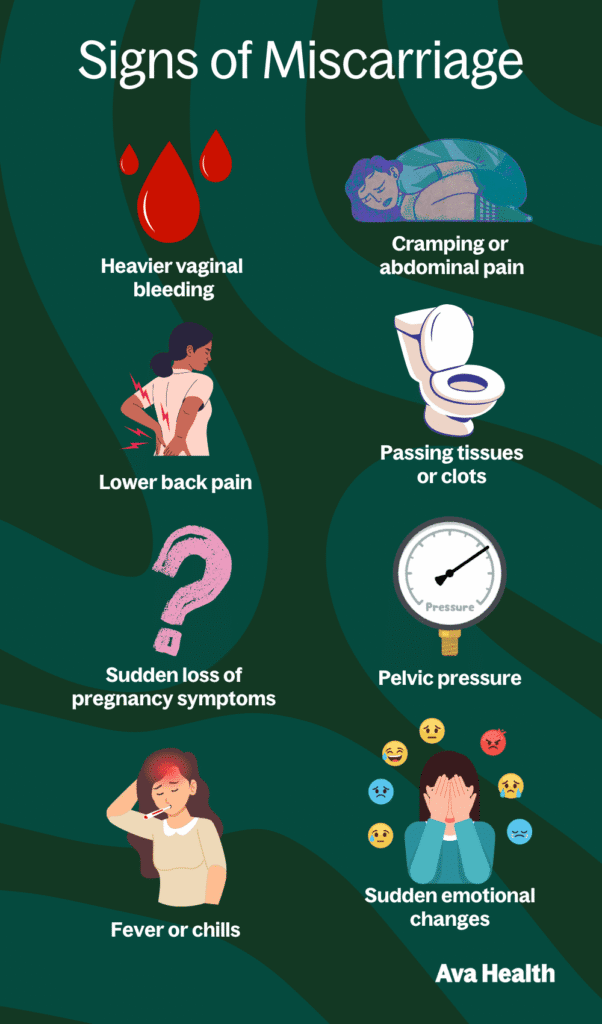
1. Vaginal Bleeding
Bleeding is the most common symptom associated with miscarriage, but not all bleeding means miscarriage.
What to Know:
- Light spotting can be common in early pregnancy
- Bleeding associated with miscarriage is often heavier
- It may include clots or tissue
- Bleeding may increase over time rather than stop
Any vaginal bleeding in pregnancy should be reported to your ob-gyn or midwife. They will guide you through any further testing or recommended care.
2. Cramping or Abdominal Pain
Cramping can occur in healthy pregnancies, but miscarriage-related cramping often feels different.
Characteristics May Include:
- Strong or persistent cramps
- Pain that worsens over time
- Pain felt in the lower abdomen or back
- Cramping combined with bleeding
Seek immediate medical care for pain that is considerably worse than your menstrual cramps, or for severe pain that is localized low on one side of your belly or the other.
3. Lower Back Pain
Dull or sharp lower back pain may accompany uterine changes during miscarriage.
While back pain can be common in pregnancy, persistent or intense pain combined with bleeding is a sign to seek care.
4. Passing Tissue or Clots
Passing grayish or pink tissue, or larger clots, may indicate pregnancy loss.
This can be frightening. If this happens:
- Seek medical care promptly
- Know that support is available
5. Sudden Loss of Pregnancy Symptoms
A noticeable decrease or sudden disappearance of pregnancy symptoms may raise concern.
This can include:
- Breast tenderness fading quickly
- Nausea stopping abruptly
- Fatigue significantly decreasing
Symptoms can fluctuate naturally, but a sudden change combined with other signs may warrant evaluation.
Less Obvious Symptoms of Miscarriage
1. Pelvic Pressure
A feeling of heaviness or pressure in the pelvis may occur as the uterus changes.
2. Fever or Chills
Fever may indicate infection, which can occur during or after miscarriage and requires prompt care.
3. Emotional Changes That Feel Sudden or Overwhelming
While emotional shifts are normal in pregnancy, intense sadness, shock, or a sense that “something isn’t right” may accompany physical symptoms.
Your intuition deserves attention.
Types of Miscarriage and How Symptoms May Differ
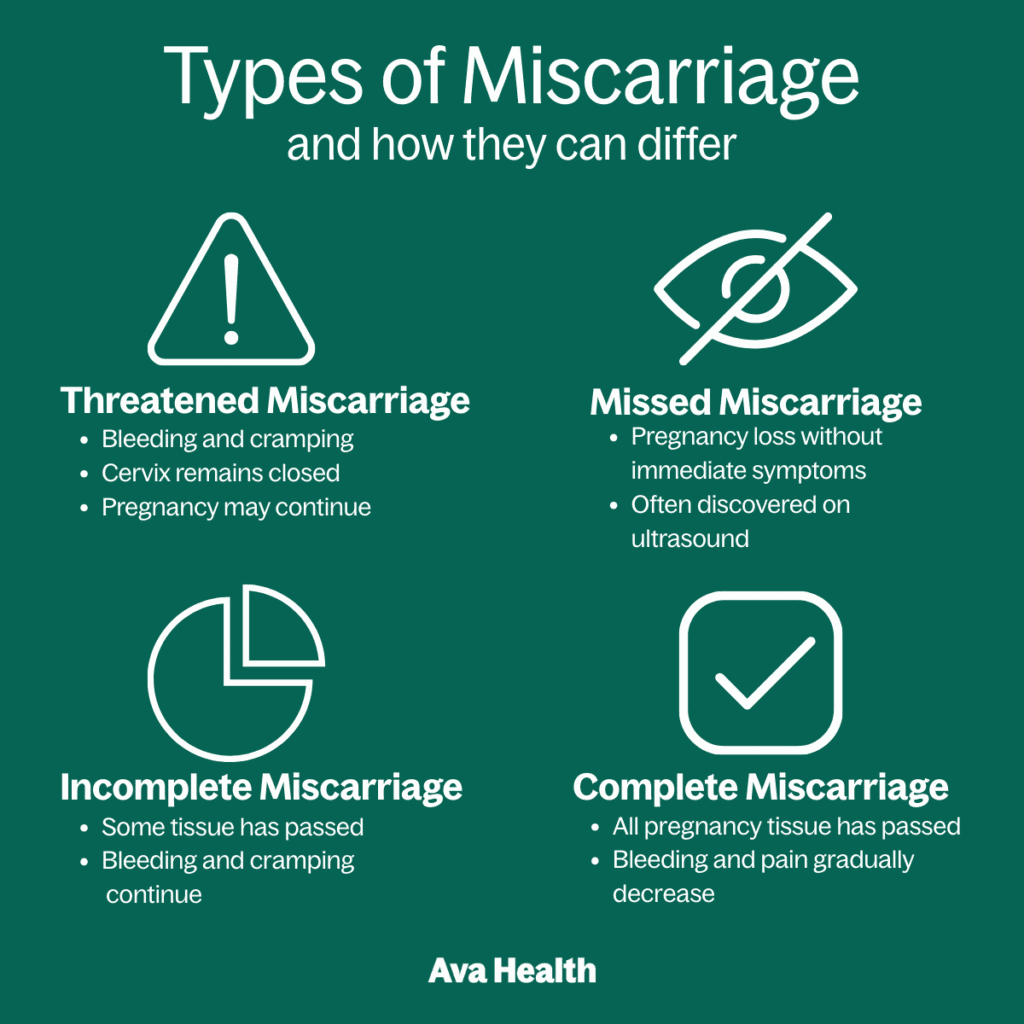
Threatened Miscarriage
- Bleeding and cramping
- Cervix remains closed
- Pregnancy may continue
Missed Miscarriage
- Pregnancy loss without immediate symptoms
- Often discovered on ultrasound
Incomplete Miscarriage
- Some tissue has passed
- Bleeding and cramping continue
Complete Miscarriage
- All pregnancy tissue has passed
- Bleeding and pain gradually decrease
Understanding these distinctions can help explain why symptoms vary widely.
When to Seek Medical Care Immediately
Contact a healthcare provider or seek urgent care if you experience:
- Heavy bleeding (soaking two pads in an hour)
- Severe abdominal or shoulder pain
- Fever over 100.4°F (38°C)
- Fainting or dizziness
- Foul-smelling discharge
These symptoms require prompt evaluation for safety and well-being.
What Does Not Cause Miscarriage?
This is important to say clearly:
Miscarriage is not caused by:
- Exercise
- Lifting groceries
- Stress
- Sexual activity
- Working or traveling
- Emotional upset
Miscarriage most often happens because the pregnancy could not develop as expected.
Risk Factors for Miscarriage
Some factors may increase risk, including:
- Chromosomal differences
- Advanced maternal age
- Certain chronic conditions
- Untreated infections
- Smoking
- Drinking Alcohol
- Using Recreational Drugs
- Unmanaged Diabetes
Having risk factors does not mean miscarriage will happen. It simply helps guide medical care.
After a Miscarriage: What to Expect Physically
Physical recovery varies.
You may experience:
- Bleeding for several days to weeks
- Cramping that gradually subsides
- Hormonal shifts affecting mood and energy
Follow-up care helps ensure healing and answers questions.
Emotional Responses to Miscarriage
There is no “right” way to feel.
You may experience:
- Grief
- Shock
- Anger
- Guilt
- Relief
- Numbness
All of these responses are valid. Emotional recovery does not follow a timeline.
Miscarriage and Future Fertility
One of the most common fears after miscarriage is whether it will happen again.
The reassuring truth:
- Most women go on to have healthy pregnancies
- One miscarriage does not significantly increase future risk
- Fertility often returns quickly
A healthcare provider can help guide timing and next steps when you’re ready.
A Holistic Perspective on Loss and Care
Miscarriage does not erase the meaning of your pregnancy or the care you held in your heart. Life has value even when it is brief, and grief does not require justification.
You are not weak for hurting. You are not broken because this happened. Healing is possible—and it can coexist with remembrance, hope, and compassion for yourself.
Reflection: You Are Allowed to Take This One Step at a Time
If you are worried about symptoms, it’s okay to seek reassurance. If you are experiencing loss, it’s okay to take time to grieve.
Educational, supportive resources exist to offer clarity without pressure and care without judgment.
Support and Next Steps
If you’re experiencing possible miscarriage symptoms:
- Reach out to a healthcare provider
- Seek evaluation if symptoms worsen
- Ask questions—you deserve answers
If you’ve experienced loss:
- Allow yourself time
- Seek emotional support if needed
- Know that you are not alone
Care is available. Compassion is available. And you deserve both.
Sources
American College of Obstetricians and Gynecologists. “Early Pregnancy Loss.” ACOG, Nov. 2018, www.acog.org/womens-health/faqs/early-pregnancy-loss.
American College of Obstetricians and Gynecologists. “Repeated Miscarriages.” ACOG, July 2023, www.acog.org/womens-health/faqs/repeated-miscarriages.
Cleveland Clinic. “Miscarriage (Pregnancy Loss).” Cleveland Clinic, 2023, my.clevelandclinic.org/health/diseases/9688-miscarriage.
Mayo Clinic Staff. “Miscarriage.” Mayo Clinic, 18 Aug. 2023, www.mayoclinic.org/diseases-conditions/miscarriage/symptoms-causes/syc-20354298.
MedlinePlus. “Miscarriage.” U.S. National Library of Medicine, updated 2023, medlineplus.gov/miscarriage.html.
Practice Committee of the American Society for Reproductive Medicine. “Evaluation and Treatment of Recurrent Pregnancy Loss: A Committee Opinion.” Fertility and Sterility, vol. 98, no. 5, 2012, pp. 1103–1111.
Share this Blog
Disclaimer: The content on this site is for informational purposes only and does not constitute medical advice. Ava Health does not refer for or perform abortions. All medical information is accurate at the time of publishing.
Other Articles You Might Be Interested In
Understanding Postpartum Depression: Causes, Symptoms, and Ways to Cope