
It’s completely natural to feel a bit unsure about how to begin conversations with an adoption agency. You’re stepping into a process filled with meaning, hope, and decisions, and taking this time to learn means you’re showing care for your future and for everyone involved. You’re not alone—and you absolutely deserve clarity, respect, and support.
What to Know — How to Talk with an Adoption Agency
Before you pick up the phone or walk into your first meeting, it helps to understand the basics of how adoption agencies operate, what they’ll ask of you, and what you should expect from them in return. This insight will help you feel grounded, confident, and empowered.
What Does an Adoption Agency Do?
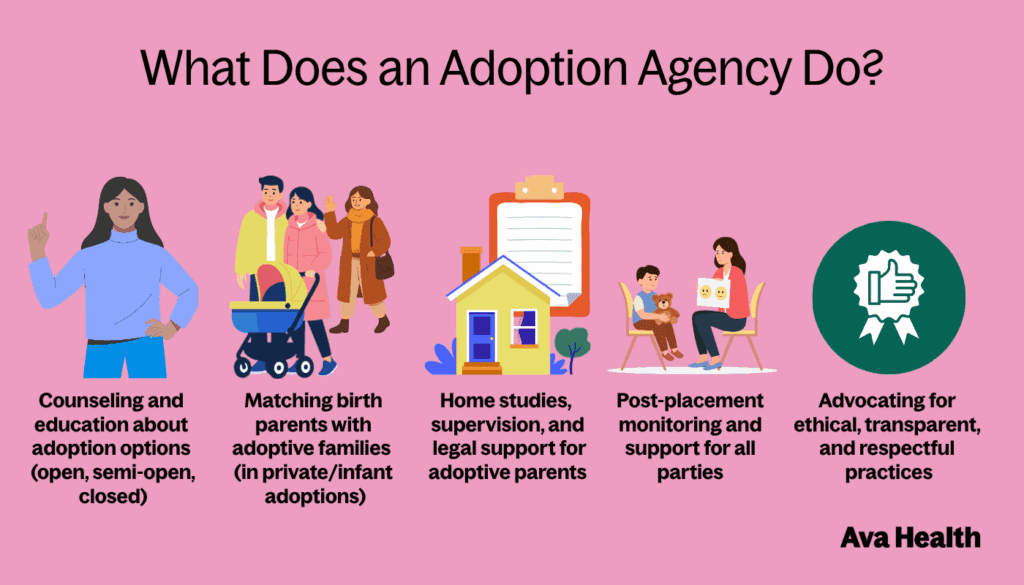
An adoption agency serves as a bridge between expectant or birth parents, adoptive parents, and children needing placement. They may provide services such as:
- Counseling and education about adoption options (open, semi-open, closed)
- Matching birth parents with adoptive families (in private/infant adoptions)
- Home studies, supervision, and legal support for adoptive parents
- Post-placement monitoring and support for all parties
- Advocating for ethical, transparent, and respectful practices throughout the process
What Should You Expect from Your First Conversation?
When you reach out—whether as a birth parent, adoptive parent or both—an agency should:
- Listen first, ask respectful questions about you and your situation, without pressure.
- Explain clearly their services: what they do, how they do it, what you will be asked to do.
- Provide honest information about timelines, costs (if applicable), rights, and your options.
- Clarify the difference between open, semi-open and closed adoption plans, including what contact or updates might look like now and later.
- Give you space and time to make decisions—without rushing. Ethical agencies highlight that you can ask questions, change your mind (within legal limits), and go at your own pace.
- Be transparent about how they will support you emotionally, legally, and practically (pregnancy-related support for birth parents, home study and training for adoptive parents, post-placement support for both).
What to Ask — Key Questions to Bring With You
These questions can help you structure your conversation with an adoption agency. You don’t have to ask all of them in the first meeting, but having some ready will help you feel prepared and informed.
These questions can help you structure your conversation with an adoption agency. You don’t have to ask all of them in the first meeting, but having some ready will help you feel prepared and informed.
Licensing, Credentials & Philosophy
- “Are you licensed by the state of Oregon (or relevant state) to provide adoption services?”
- “Are you accredited or affiliated with national adoption organizations?” (e.g. by the Council on Accreditation)
- “What types of adoption do you handle (infant, private, foster-care, domestic, international)?”
- “What is your agency’s philosophy around openness, birth parent choice, and post-adoption relationships?”
Services & Support
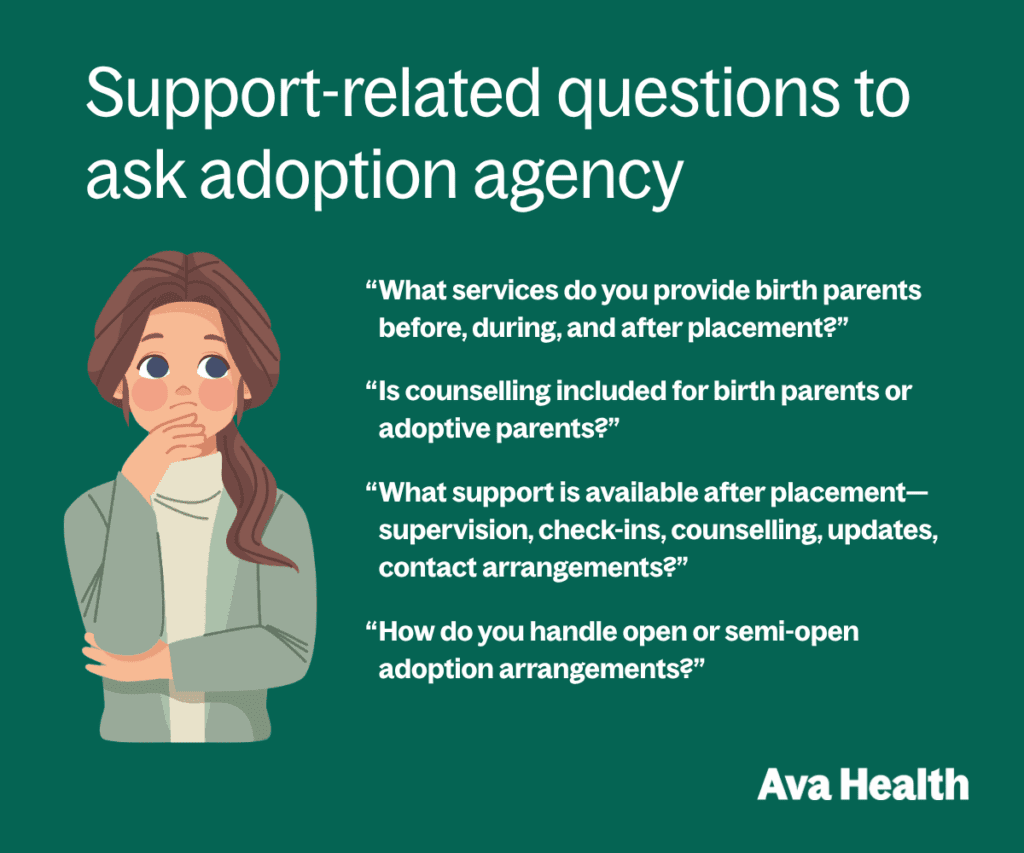
- “What services do you provide birth parents (or if you are adoptive parent: “what do you provide adoptive parents”) before, during, and after placement?”
- “Is counseling included for birth parents or adoptive parents? Is it free of charge or bundled in cost?”
- “What support is available after placement—supervision, check-ins, counseling, updates, contact arrangements?”
- “How do you handle open or semi-open adoption arrangements? What kind of contact or updates are typical?”
Process & Transparency
- “What is the typical timeline from when I reach out until placement / finalization (or if you’re a birth parent: until your plan is in place)?”
- “How many adoptive families do you currently work with? How many children did you place last year?” (This helps you gauge how busy the agency is, how many matches they do.)
- “What are the fees, what do they include, and are there any possible extra or hidden costs?”
- “How will you communicate with me? Who will be my main contact? How much access will I have to the person working with me?”
Rights & Choice
- “How much choice will I have in selecting or reviewing adoptive parents (or if you’re adoptive: reviewing birth parent profile)?”
- “What rights do I have? What happens if I change my mind (within legal limits)?”
- “What happens if something doesn’t go as planned—for example, a placement disruption or changed circumstances?”
Risk, Ethics & Fit
- “Have you ever had your license suspended or revoked, or are there any formal complaints filed against your agency?”
- “Can you provide references or testimonials (birth parents, adoptive families) who have worked with you?”
- “What sets your agency apart? How do you ensure the child’s best interest, birth parent support, and ethical practices are prioritized above all?”
What to Expect — From First Call to Next Steps
Here’s a general flow you may experience when talking to an adoption agency, with what you should look out for, and how you can prepare.
Step 1: Initial Contact
- You call or email the agency and express interest (“I’m exploring adoption as a birth parent,” or “I’m an adoptive parent looking for an agency”).
- They ask a few basic questions about you (your situation, your timeline, your goals) and offer an initial consultation—often free or no obligation.
- You have the opportunity to ask the questions above. Take notes. Feel free to ask for their written materials (brochure, fee schedule, process timeline).
- Evaluate: Did they listen? Did they make you feel respected, informed, safe? Or did you feel rushed or unsure? Your instincts matter.
Step 2: Deeper Exploration / Meeting
- The agency will likely ask you to fill out some forms (basic information) and schedule a meeting or orientation session.
- They may send you their booklet or packet: explaining adoption types, what your rights are, what your responsibilities might be, how they handle matching, placement, legal, post-placement support.
- You’ll ask key questions about openness, matching, expenses, counseling, timelines, rights, and contingency for changes.
- You might begin reviewing adoptive parent profiles (if you’re the birth parent) or preparing your home study (if you’re adoptive parent).
- You’ll want a clear understanding of “what happens next” – what you have to do, what the agency does, what the timeline looks like, and how you’ll be supported.
Step 3: Decision Point
- After information and meetings, you choose whether this agency is a “fit” for you. If yes, you may sign agreement/contract and begin the formal process. If no, you have the freedom to choose another agency.
- Look for an agency that updates you on the process, allows you to ask questions at any time, and keeps your interests and the child’s welfare paramount.
Step 4: Ongoing Communication & Support
- During the process you can probably expect check-ins from your assigned social worker or counselor, communication on progress, and responses to questions.
- After placement or finalization: you should expect post‐adoption follow-up, support groups, counseling or resources, and clarity about how contact or updates continue (if applicable).
- If you’re a birth parent: you should feel supported, given space for your emotions, counseled about grief or hope, and never feel pressured. If you’re an adoptive parent: you should feel prepared, supported, trained, and actively guided into the parenting journey.
Time to Pause
Choosing to talk to an adoption agency is an act of care—for yourself, for the child, and for the future. Whether you are the birth parent looking for support and clarity, or the adoptive parent seeking a trustworthy partner in your family-building journey, you are pursuing love, stability, and hope.
You are more than the questions you ask or the process you follow. You are a person deserving of dignity, truth, and compassion—no matter what path lies ahead. Your values matter, your emotions matter, and your peace matters.
This process doesn’t define you—it’s part of a larger story of grace, choice, and care. No matter where you are in your exploration, you deserve to move forward with confidence, backed by information and surrounded by support.
Reflection & Encouragement
Take a breath and pause. If you’re reading this because you’re beginning the journey of talking with an adoption agency:
- What one or two questions feel most important to you right now?
- How will you feel if you ask them and receive honest answers—what will that give you?
- Who will you talk to—counselor, trusted friend—after the call to help you process what you heard and how you feel?
- What timeline feels comfortable for you? Do you need time, or do you feel ready to pick up the phone now?
You deserve the space to ask questions and the freedom to choose a partner (agency) with whom you feel safe, informed, and empowered.
Support & Next Steps
When you’re ready, a possible next step is to ask for a list of “FAQs” from several agencies and compare their responses. See which agency listens to you, makes you feel respected, and gives you the space you need.
If you want to know more about adoption overall, see Adoption 101.
Note: This blog post is for informational purposes only and does not constitute legal advice. For personalized guidance, please consult with a licensed adoption professional or attorney.