
- Medically Reviewed
- Last Updated
If you’re researching abortion options, one of the most common and understandable questions is: How much will this hurt, and what will recovery really be like?
Pain and healing are deeply personal experiences, and no two bodies respond exactly the same way. It’s normal to want clear, honest information—without exaggeration, pressure, or minimization.
You deserve to understand what your body may go through before making any decision. This guide walks through pain levels, recovery timelines, and physical and emotional experiences associated with each abortion option, so you can move forward informed.
Table of Contents
Why Understanding Pain and Recovery Matters Before an Abortion
When women search phrases like “does an abortion hurt,” “abortion recovery time,” or “what does an abortion feel like,” they’re usually not just asking about physical discomfort. They’re asking:
- Will I be okay afterward?
- How long will it take to feel normal again?
- What should I prepare for—physically and emotionally?
- Will I be able to work, care for others, or be alone?
Understanding pain and recovery ahead of time allows you to:
- Set realistic expectations
- Take note of your space and schedule
- Seek support if needed
- Make a decision with clarity rather than fear
“What to Know Before an Abortion” offers a helpful foundation for these kinds of questions and can be a good place to start.
Overview of Abortion Options and Why Experiences Differ
There are two primary abortion options, and pain and recovery can differ significantly between them, especially depending on how far along the pregnancy is.
The two main abortion options:
- Medication abortion (often called the abortion pill)
- In-clinic (surgical) abortion
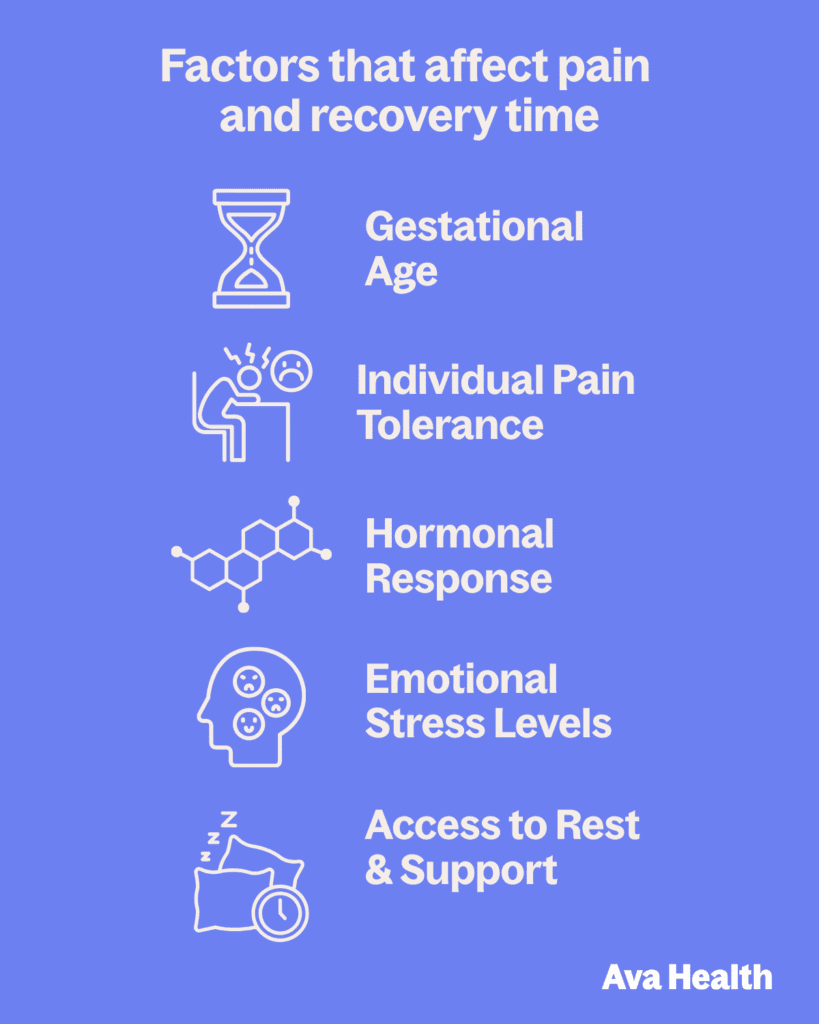
Factors that affect pain and recovery include:
- Gestational age
- Individual pain tolerance
- Hormonal response
- Emotional stress levels
- Access to rest and support afterward
Because of this, experiences exist on a wide spectrum. The goal of this article is not to predict your exact experience—but to help you understand what is possible and common.
Medication Abortion: Pain and Recovery What to Expect
Medication abortion involves taking medications that stops progesterone from reaching the pregnancy, causes the pregnancy to detach from the uterine lining, causes the uterus to contract, and then the uterus expels the pregnancy. Many people search “how painful is the abortion pill” or “abortion pill recovery timeline” before deciding.
What does taking the abortion pill feel like?
Most women describe the pain from a medication abortion as strong cramping, often compared to:
- A very heavy menstrual period
- Intense menstrual cramps
- Early labor-like contractions (for some)
Pain typically:
- Begins within a few hours after the second medication
- Comes in waves
- Peaks as the uterus empties
Some women experience manageable discomfort, while others describe significant pain. “Understanding the abortion pill” explains why experiences can vary so widely.
How long does pain last with the abortion pill?
A common timeline is:
- First 24 hours after taking the 2nd pill: strongest cramps and bleeding
- Days 2–7: lighter cramping and bleeding
- Weeks 1–4: spotting may continue
Bleeding can last longer than many women expect, which can be emotionally and physically tiring.
Recovery after a medication abortion
Physical recovery includes:
- Fatigue (often underestimated)
- Hormonal shifts
- Ongoing spotting
- Breast tenderness
Emotional recovery may involve:
- Relief
- Sadness
- Mood swings
- Unexpected grief
There is no single “normal” emotional response. Ava Health’s “Abortion Risks and Facts” addresses both physical and emotional recovery honestly.
In-Clinic (Procedural) Abortion: What to Expect During and After the Procedure
From Sage Journals: “An abortion does not occur in isolation from interrelated personal, familial, and social conditions that influence the experience of becoming pregnant, the reaction to discovery of the pregnancy, and the abortion decision. These factors will also affect women’s post-abortion adjustments, including adjusting to the memory of the abortion itself, potential changes in relationships associated with the abortion, and whether this experience can be shared or must be kept secret. These are all parts of the abortion experience. Therefore, the mental health effects of abortion cannot be properly limited to the day on which the surgical or medical abortion takes place. The entirety of the abortion experience, including the weeks before and after it, must be considered.”
What does getting a clinic abortion feel like?
Pain varies depending on:
- Gestational age
- Type of procedure
- Pain management options
Some women report:
- Pressure or cramping during the procedure
- Brief intense discomfort
- Minimal pain with sedation
Others describe the experience as physically intense but short-lived.
How long does pain last after a clinic abortion?
Typical recovery timeline:
- Day of procedure: cramping, fatigue
- Next few days: light to moderate cramps
- 1–2 weeks: spotting may continue
Because the procedure itself is shorter, physical recovery is often quicker than with medication abortion—but emotional recovery may still take time.
From Sage Journals: “Common ground exists regarding the very basic fact that at least some women do have significant mental health issues that are caused, triggered, aggravated, or complicated by their abortion experience. In many cases, this may be due to feeling pressured into an abortion or choosing an abortion without sufficient attention to maternal desires or moral beliefs that may make it difficult to reconcile one’s choice with one’s self-identity.”
Overall, healing time will depend on many factors.
Comparing Pain: Medication vs. Procedural Abortion
Here’s a general comparison regarding the physical experience and recovery:
Factor | Medication Abortion | SurgicalAbortion |
Pain duration | Longer (hours to days) | Shorter (minutes to days) |
Pain intensity | Can be strong and prolonged | Often brief, sometimes intense |
Bleeding | Heavier, longer | Lighter, shorter |
At-home experience | Yes | No |
Recovery timeline | Often weeks | Often days to a week |
Neither option is painless, and neither option is “better” than the other.
Emotional Recovery: Often Overlooked, Always Important
Many women prepare for physical pain but feel surprised by emotional after-effects.
You may experience:
- Relief and gratitude
- Grief or sadness
- Emotional numbness
- Conflicting feelings at once
Hormonal changes alone can affect mood, regardless of how confident someone feels about their decision. To learn more about mental health and how an abortion may affect this, read Understanding the Mental Health Effects of Abortion.
Signs You May Need Medical Follow-Up or Counseling
Regardless of the abortion method, it’s important to know when to seek medical care.
Seek help if you experience:
- Fever over 100.4°F
- Severe or worsening pain
- Heavy bleeding (soaking more than two pads an hour)
- Foul-smelling discharge
- Feeling faint or unwell
Preparing for Recovery: What Helps Most
If you’re considering abortion, preparation can make recovery more manageable.
Helpful preparations include:
- Time off work or school
- Comfortable space to rest
- Heating pad
- Hydration and foods that are gentle to your digestive system
- Emotional support (someone to check in)
Giving Yourself Permission to Heal
Recovery isn’t just about when bleeding stops or cramps fade. It’s also about how you feel weeks, months, or even years later.
You are allowed to:
- Take your time
- Ask for support
- Feel more than one emotion
- Seek counseling or after-care support
Healing doesn’t follow a schedule—and it doesn’t look the same for everyone.
If You’re Still Deciding
If you’re still weighing options, you don’t have to decide today. Learning about pain and recovery is part of caring for yourself, not rushing yourself.
Ava Health provides a confidential space to:
- Confirm pregnancy
- Learn about your body
- Understand abortion options
- Ask questions without pressure
You deserve truth, compassion, and time—whatever path you choose.
Share this Blog
Disclaimer: The content on this site is for informational purposes only and does not constitute medical advice. Ava Health does not refer for or perform abortions. All medical information is accurate at the time of publishing.
Medically Reviewed By:

Other Articles You Might Be Interested In
Pain, Recovery, and What to Expect With Each Abortion Option

Author
 Graduated from UCLA with Bachelors of Science in Nursing (BSN).Worked at UCLA Medical Center (Med-Surg); American Red Cross (Apheresis); Banner Thunderbird Medical Center (Orthopedics); Health Dialog (Research-Driven Education for Patients); Long Term Care Community Nurse (Contract with Oregon Department of Human Services Office of Aging and People with Disabilities)Currently works as the Director of Nursing at Ava Health in Portland, OR.