- Ava Health
Hearing the words “you have an ovarian cyst” can feel unsettling. You might be wondering what it means for your health, your fertility, or your future. It’s natural to feel anxious when something unfamiliar shows up on an ultrasound or during an exam.
Take a breath. In most cases, ovarian cysts are common, manageable, and not dangerous. Learning what they are—and what they aren’t—can bring reassurance and help you feel grounded as you take the next steps. You are not alone in this, and understanding your body is a powerful form of care.
Table of Contents
What Are Ovarian Cysts?
An ovarian cyst is a fluid-filled sac that forms on or inside an ovary.
Ovarian cysts are most common during the reproductive years, but they can occur at any age. In many cases, they form naturally as part of the menstrual cycle and resolve on their own without treatment.
Key Things to Know First
- Most ovarian cysts are benign (non-cancerous)
- Many cause no symptoms at all
- Some cysts come and go naturally
- A cyst does not automatically mean surgery is needed
Understanding the type of cyst you have is the most important part of knowing what it means for your health.
The Most Common Types of Ovarian Cysts
1. Functional Ovarian Cysts
Functional cysts are the most common type and are related to ovulation.
Follicular Cysts
These form when an egg doesn’t release properly during ovulation. The follicle continues to grow instead of breaking open.
Corpus Luteum Cysts
After ovulation, the follicle becomes the corpus luteum. If it fills with fluid, a cyst can form.
What this means:
Functional cysts are usually harmless and often resolve within one to three menstrual cycles.
2. Hemorrhagic Ovarian Cysts
These cysts occur when bleeding happens inside a cyst. They can sometimes cause sudden pain but often resolve on their own.
Common symptoms may include:
- Sharp or localized pelvic pain
- Pain during movement or intercourse
- Temporary discomfort that improves over time
3. Dermoid Cysts (Mature Teratomas)
Dermoid cysts are made of tissue present from birth and may contain hair, fat, or other tissue.
What to know:
- Usually benign
- Tend to grow slowly
- May require monitoring or removal if large
4. Endometriomas (Chocolate Cysts)
These cysts are associated with endometriosis, a condition where tissue similar to the uterine lining grows outside the uterus.
Symptoms may include:
- Chronic pelvic pain
- Painful periods
- Pain during intercourse
5. Polycystic Ovaries (PCOS-Related)
In polycystic ovary syndrome (PCOS), multiple small follicles may appear on the ovaries due to hormonal imbalance.
Important distinction:
Having polycystic-appearing ovaries is not the same as having ovarian cysts that need removal.
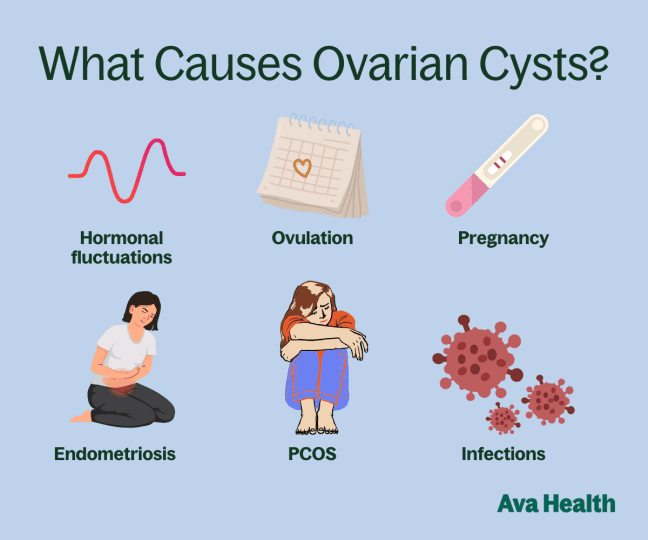
What Causes Ovarian Cysts?
Ovarian cysts can develop for several reasons, including:
- Hormonal fluctuations
- Ovulation patterns
- Pregnancy
- Endometriosis
- PCOS
- Pelvic infections
Common Symptoms of Ovarian Cysts
Many ovarian cysts are asymptomatic, meaning they don’t cause noticeable symptoms. When symptoms do occur, they may include:
- Pelvic pain or pressure
- Bloating or fullness in the abdomen
- Pain during intercourse
- Changes in menstrual cycle
- Lower back or thigh pain
- Pain during bowel movements
Symptoms can vary depending on the size, type, and whether a cyst ruptures or twists.
When Ovarian Cyst Symptoms Need Immediate Attention
While most cysts are not emergencies, certain symptoms should be evaluated promptly.
Seek medical care if you experience:
- Sudden, severe pelvic pain
- Pain with fever or vomiting
- Dizziness or fainting
- Rapid breathing
These could be signs of ovarian torsion or a ruptured cyst, which require immediate attention.
How Are Ovarian Cysts Diagnosed?
Pelvic Exam
A healthcare provider may feel an enlarged ovary during a routine exam.
Ultrasound
Ultrasound is the most common tool used to:
- Confirm the presence of a cyst
- Determine its size and type
- Monitor changes over time
Blood Tests
In certain cases, blood tests may be ordered to evaluate hormone levels or rule out rare concerns.
Do Ovarian Cysts Affect Fertility?
This is one of the most common concerns—and for good reason.
The Reassuring Truth
Most ovarian cysts do not affect fertility.
- Functional cysts are part of normal ovulation
- Many women conceive with cysts present
- PCOS-related cysts affect ovulation but are manageable
Certain conditions, such as endometriosis, may impact fertility, but even then, many women go on to conceive with proper support and care.
Treatment Options for Ovarian Cysts
Treatment depends on:
- Type of cyst
- Size
- Symptoms
- Age
- Overall health
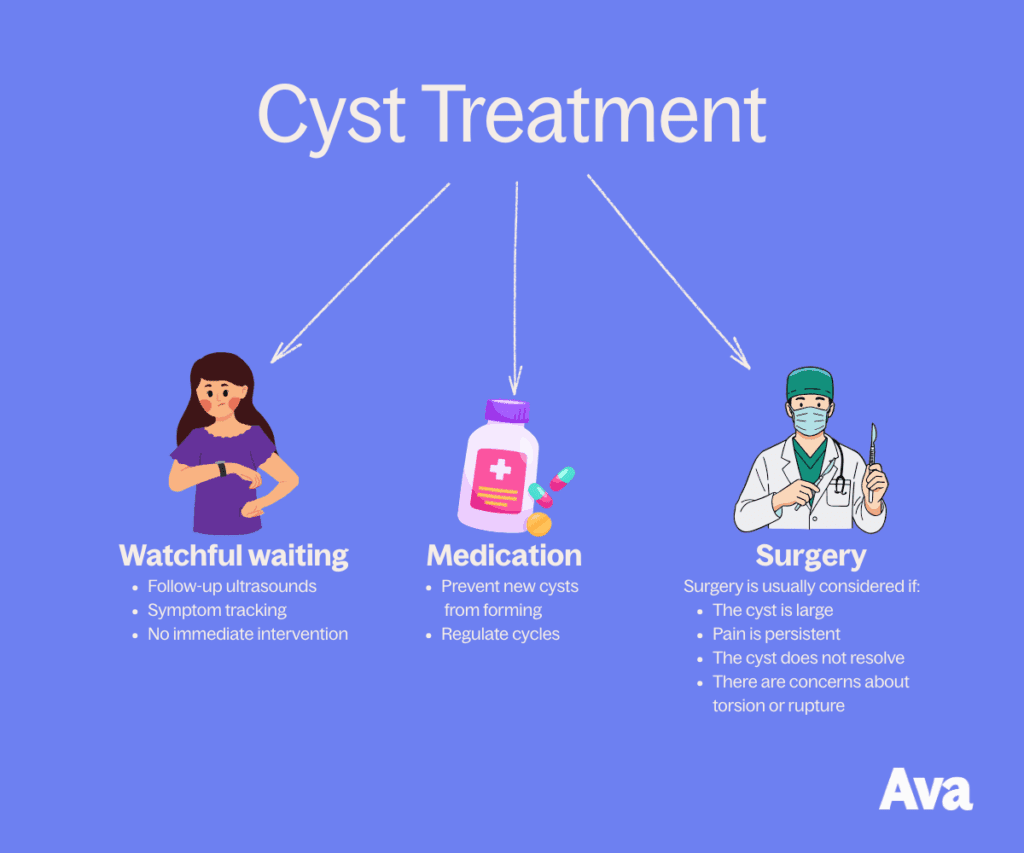
Watchful Waiting
For many women, the safest approach is simply monitoring.
- Follow-up ultrasounds
- Symptom tracking
- No immediate intervention
This approach respects the body’s ability to heal and regulate naturally.
Medication
Hormonal birth control may be recommended to:
- Prevent new cysts from forming
- Regulate cycles
It does not typically shrink existing cysts, but it may reduce recurrence.
Surgery (When Needed)
Surgery is usually considered if:
- The cyst is large
- Pain is persistent
- The cyst does not resolve
- There are concerns about torsion or rupture
Most surgeries aim to preserve ovarian tissue whenever possible.
A Holistic Perspective on Ovarian Health
Your body is not failing you because a cyst appeared. Ovarian cysts are often a sign of how responsive and dynamic the reproductive system is.
Your health journey should include patience, understanding, and thoughtful care. Your worth is not defined by a diagnosis or an ultrasound result. With accurate information and supportive care, most ovarian cysts are manageable and temporary.
Reflection: Listening to Your Body Without Fear
It’s okay to ask questions. It’s okay to seek clarity. And it’s okay to take time before making decisions.
Your body communicates in many ways, and learning to be curious despite fear can bring peace. Supportive resources exist to help you feel informed, not overwhelmed.
Support and Next Steps
If you’ve been diagnosed with an ovarian cyst or are experiencing symptoms, consider speaking with a trusted healthcare provider who takes time to explain your options clearly.
Learning more about your cycle, your hormones, and your overall reproductive health can allow you to advocate for your wellbeing with greater knowledge and confidence.. Care, understanding, and support are available when you’re ready.
Sources
American College of Obstetricians and Gynecologists. “Ovarian Cysts.” ACOG,
https://www.acog.org/womens-health/faqs/ovarian-cysts. Accessed 23 Jan. 2026.
Cleveland Clinic. “Ovarian Cysts: Causes, Symptoms, Diagnosis & Treatment.” Cleveland Clinic,
https://my.clevelandclinic.org/health/diseases/9133-ovarian-cysts. Accessed 23 Jan. 2026.
Healthline Editorial Team. “Ovarian Cysts: Symptoms, Causes, Treatment, and More.” Healthline, Healthline Media,
https://www.healthline.com/health/ovarian-cysts. Accessed 23 Jan. 2026.
Mayo Clinic Staff. “Ovarian Cysts – Symptoms and Causes.” Mayo Clinic,
https://www.mayoclinic.org/diseases-conditions/ovarian-cysts/symptoms-causes/syc-20353405. Accessed 23 Jan. 2026.
Mayo Clinic Staff. “Ovarian Cysts – Diagnosis and Treatment.” Mayo Clinic,
https://www.mayoclinic.org/diseases-conditions/ovarian-cysts/diagnosis-treatment/drc-20353411. Accessed 23 Jan. 2026.
Mayo Clinic Staff. “Polycystic Ovary Syndrome (PCOS) – Symptoms and Causes.” Mayo Clinic,
https://www.mayoclinic.org/diseases-conditions/pcos/symptoms-causes/syc-20353439. Accessed 23 Jan. 2026.
MedlinePlus. “Ovarian Cysts.” MedlinePlus, U.S. National Library of Medicine,
https://medlineplus.gov/ovariancysts.html. Accessed 23 Jan. 2026.
Office on Women’s Health. “Ovarian Cysts.” U.S. Department of Health and Human Services,
https://www.womenshealth.gov/a-z-topics/ovarian-cysts. Accessed 23 Jan. 2026.
Nebraska Medicine. “Ovarian Cysts: Symptoms, Diagnosis, and Treatment.” Nebraska Medicine,
https://www.nebraskamed.com/health/conditions-and-services/womens-health/ovarian-cysts-symptoms-diagnosis-and-treatment. Accessed 23 Jan. 2026.
Share this Blog
Disclaimer: The content on this site is for informational purposes only and does not constitute medical advice. Ava Health does not refer for or perform abortions. All medical information is accurate at the time of publishing.
Other Articles You Might Be Interested In