
Contraception vs. Abortion Pill: Key Differences Explained
- Medically Reviewed
- Last Updated
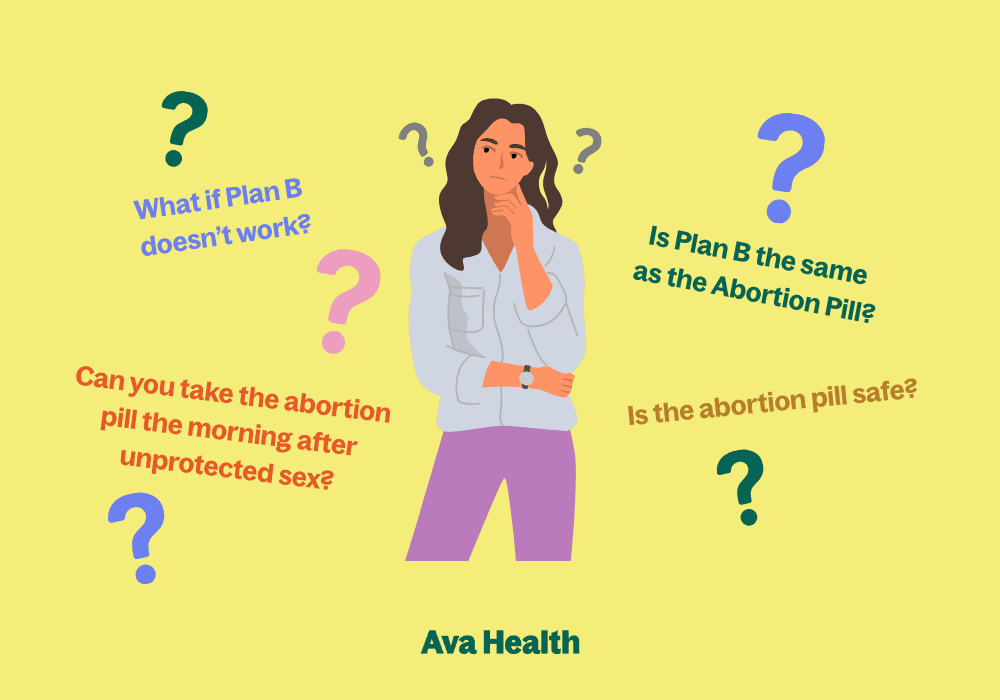
When it comes to reproductive health, two terms are often confused: emergency contraception (sometimes called the “morning-after pill”) and the abortion pill (medication abortion). While these medications are both related to pregnancy, they are not the same thing.
At Ava Health, we often hear questions like:
- “Is Plan B the same as the abortion pill?”
- “Can emergency contraception end a pregnancy?”
- “How do abortion pills actually work?”
This blog will walk you through the key differences between emergency contraception and abortion pills, how each works, when they are used, their side effects, and the misconceptions that surround them
What Is Emergency Contraception?
Emergency contraception (EC) is a medication or device used to prevent fertilization after unprotected sex or contraceptive failure. Instead, it works by delaying ovulation (the release of an egg from the ovary) so sperm cannot fertilize an egg.
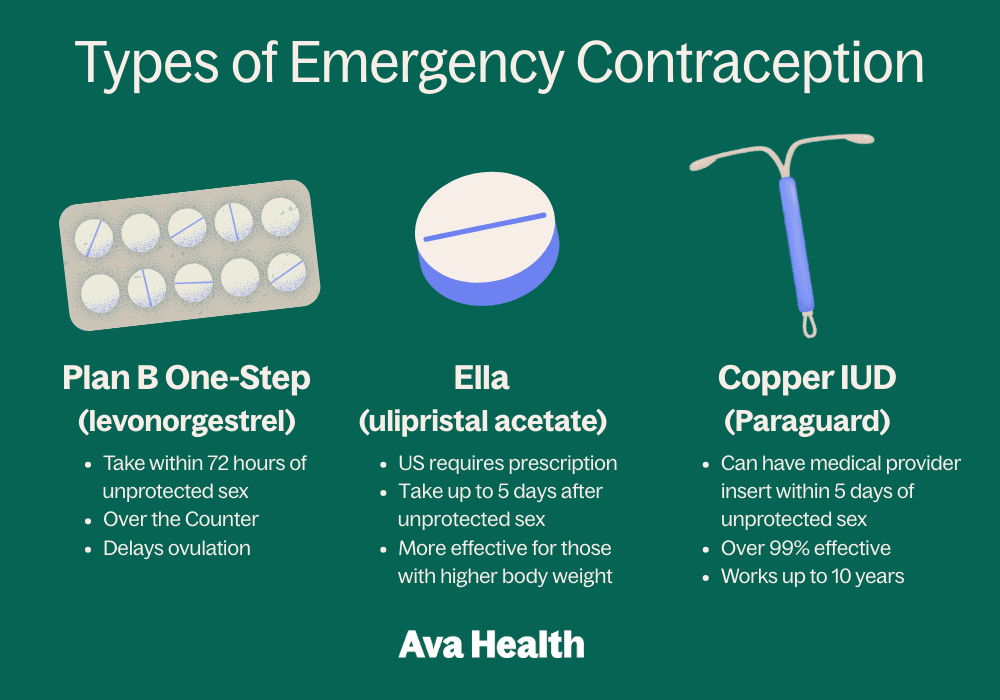
Plan B One-Step (levonorgestrel)
- Best taken within 72 hours of unprotected sex
- Available over the counter in most pharmacies
- Works by delaying ovulation
Quick note: Plan B and Birth Control are not the same thing. Read more about this in What is the difference between Plan B and Birth Control?
Ella (ulipristal acetate)
- Requires a prescription in the U.S.
- Can be taken up to 5 days (120 hours) after unprotected sex
- May be more effective than Plan B for people with higher body weight or when taken later
Copper IUD (Paragard)
- When it is inserted within 5 days of unprotected sex, its main mechanism of action is to kill the sperm or make them immobile. It may also change the lining of the uterus, preventing implantation should fertilization occur.
- Over 99% effective
- Provides long-term contraception for up to 10 years
For more information on IUD’s: What is an IUD?
What Is the Abortion Pill?
The abortion pill (also called medication abortion) is a regimen of two medications used to end an existing pregnancy.
How the Abortion Pill Works
- Mifepristone
- Blocks progesterone, a hormone needed for pregnancy to continue
- Causes the uterine lining to thin and detach
2. Misoprostol
- Taken 24–48 hours later
- Causes the uterus to contract and expel the pregnancy
This process is similar to an early miscarriage. It is approved in the U.S. for pregnancies up to 10 weeks.
Key takeaway: The abortion pill ends a pregnancy that has already implanted in the uterus.
Emergency Contraception vs. Abortion Pill: The Main Differences
Feature | Emergency Contraception | Abortion Pill |
Purpose | Prevents pregnancy before it begins, if ovulation hasn’t occurred | Ends an existing pregnancy |
When Used | Within 3–5 days after unprotected sex | Up to 10 weeks after pregnancy begins |
How It Works | Delays ovulation, prevents fertilization | Blocks progesterone, expels pregnancy |
Availability | Plan B: over the counter, Ella: prescription, IUD: clinic insertion | Prescription required |
Pregnancy Status | Generally effective if taken before ovulation occurs | Taken after implantation occurs |
Timing: When Each Option Works
- Emergency contraception: Used to prevent pregnancy from occurring if taken before ovulation occurs.
- Abortion pill: Used to end a pregnancy, after a pregnancy is already confirmed, up to 10 weeks.
Effectiveness
- Plan B: Reduces chance of pregnancy by 75–89% if taken within 72 hours
- Ella: About 85% effective when taken within 5 days of unprotective sex, and before ovulation
- Copper IUD: Over 99% effective
- Abortion pill: More than 95% effective when taken correctly within the first 10 weeks of pregnancy
Side Effects
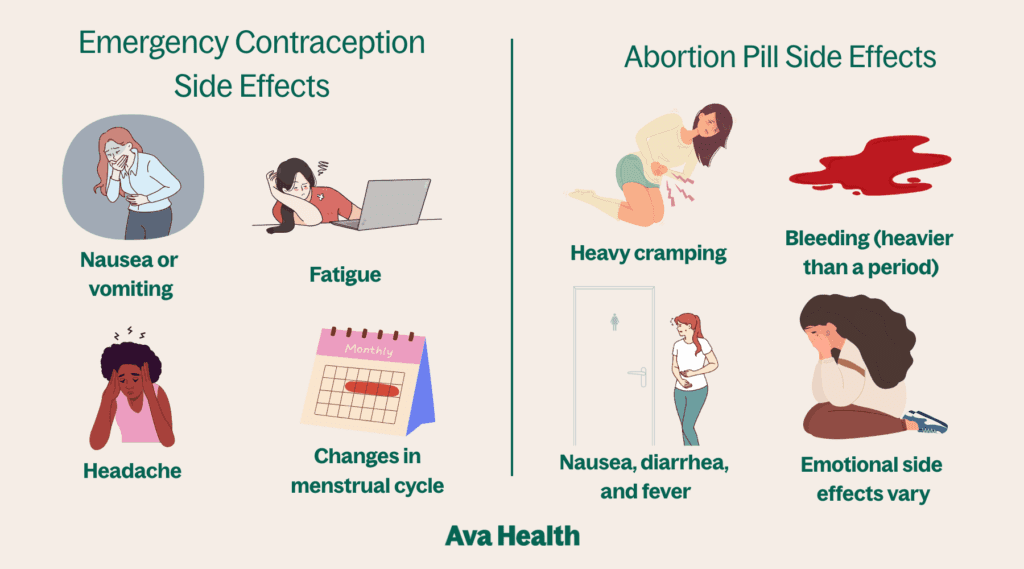
Emergency Contraception Side Effects
- Nausea or vomiting
- Fatigue
- Headache
- Changes in next menstrual cycle
More about emergency contraception: Emergency Contraception and how it works?
Abortion Pill Side Effects
- Heavy cramping
- Bleeding (heavier than a period)
- Nausea, diarrhea, or fever
- Emotional side effects vary
Another key difference: bleeding with emergency contraception is minimal, while abortion pills typically cause significant cramping and bleeding.
Availability and Access
- Plan B: Available at most pharmacies without prescription or age restriction
- Ella: Prescription required
- Copper IUD: Must be placed by a healthcare provider
- Abortion pill: Prescription required, and laws vary by state in the U.S.
Common Myths and Misconceptions
Myth 1: “Plan B causes abortion.”
❌ False. Plan B prevents ovulation. It does not affect a pregnancy that has already been implanted into the uterus.
Myth 2: “The abortion pill and the morning-after pill are the same.”
❌ False. The morning-after pill prevents pregnancy, and the abortion pill ends pregnancy.
Myth 3: “Emergency contraception works at any stage of pregnancy.”
❌ False. EC does not work if implantation has already occurred. Learn more about this in Emergency Contraception and how it works.
Myth 4: “Abortion pills are available over the counter.”
❌ False. They require a prescription and are regulated differently depending on location.
FAQs About Emergency Contraception and Abortion Pills
- Is Plan B the same as the abortion pill?
No. Plan B prevents pregnancy before it starts. The abortion pill ends an established pregnancy.
2. Should I take the abortion pill the morning after unprotected sex?
No. If pregnancy has not yet occurred, the abortion pill is unnecessary. Emergency contraception is the correct option if you are trying to prevent pregnancy
- What if Plan B doesn’t work?
If EC fails and pregnancy occurs, options include parenting, adoption, or abortion (depending on laws in your state).
- Can emergency contraception harm an already implanted pregnancy?
No. Studies show Plan B and Ella do not harm an existing pregnancy.
Key Takeaways
- Emergency contraception is not the same as abortion pills.
- Emergency contraception prevents fertilization
- The abortion pill can end an existing pregnancy.
Timing, purpose, and effects are all different. Understanding these differences helps reduce confusion and ensures women get accurate, timely care.
Final Thoughts
At Ava Health, we believe women deserve clear, compassionate, and accurate information about their reproductive health. We seek to clear up any misunderstandings you may have about your pregnancy options, while providing a safe space for you to process everything you are going through. If you would like to get in touch with us, reach out at (971) 358-3797 to schedule an appointment, or click here to book online.
Note: This blog post is for informational purposes only and does not constitute medical advice. Ava Health does not refer for or perform abortions. All medical information is accurate at the time of publishing this blog.
Sources:
- American College of Obstetricians and Gynecologists. “Emergency Contraception.” ACOG Practice Bulletin No. 152, Sept. 2015, https://www.acog.org/clinical/clinical-guidance/practice-bulletin/articles/2015/09/emergency-contraception.
Centers for Disease Control and Prevention. “Contraception: Emergency Contraception.” CDC Reproductive Health Division, 2024, https://www.cdc.gov/contraception/hcp/usspr/emergency-contraception.html.
Cleland, Kelly, et al. “Emergency Contraception Review: Evidence-Based Recommendations for Clinicians.” Clinical Obstetrics and Gynecology, vol. 57, no. 4, 2014, pp. 741–750. DOI: 10.1097/GRF.0000000000000070, https://pubmed.ncbi.nlm.nih.gov/25254919/
U.S. Food and Drug Administration. “Plan B One-Step (1.5 mg levonorgestrel) Information.” FDA, 2022, https://www.fda.gov/drugs/postmarket-drug-safety-information-patients-and-providers/plan-b-one-step-15-mg-levonorgestrel-information.
Gemzell-Danielsson, Kristina, et al. “Emergency Contraception—Mechanisms of Action.” Contraception, vol. 87, no. 3, 2013, pp. 300–308. DOI: 10.1016/j.contraception.2012.08.021.
American College of Obstetricians and Gynecologists. “Frequently Asked Questions: Emergency Contraception.” ACOG, 2024, https://www.acog.org/womens-health/faqs/emergency-contraception.
Share this Blog
Disclaimer: The content on this site is for informational purposes only and does not constitute medical advice. Ava Health does not refer for or perform abortions. All medical information is accurate at the time of publishing.
Medically Reviewed By:

Anka Radutiu, BSN, RN
Other Articles You Might Be Interested In


I Think I Might Be Pregnant: What to Do Before You Take a Test