- Ava Health
It’s understandable to feel uncertain when a test result doesn’t match what you expected. If you’re feeling anxious or confused, you’re not alone — many women experience this moment of waiting and wondering.
The short answer is yes, a pregnancy test can be wrong. Still, this is very uncommon when a test is taken at the right time and used as directed. Most false results happen because of timing, not because something is wrong with your body.
If you’re unsure about a result, there are practical steps you can take to find clarity.
Table of Contents
How Pregnancy Tests Work — and Why Timing Matters
Home pregnancy tests look for a hormone called hCG, which your body begins producing after a pregnancy implants in the uterus. According to the Mayo Clinic’s explanation of home pregnancy tests, hCG does not appear immediately after conception and rises gradually in early pregnancy.
This timing is important to understand:
- hCG does not appear immediately after sex or even after fertilization
- Implantation usually happens about 6 days after ovulation
- hCG levels rise gradually after implantation
If you test before enough hCG is present, the result may be negative even if a pregnancy has begun. This often explains why someone may feel pregnant but not yet see a positive test.
If you want to know more in-depth about how pregnancy tests work, check out: How Pregnancy Tests Work
Can a Pregnancy Test Be Wrong?
Unlikely, but yes — but false results are much more likely to be false negatives than false positives.
Modern pregnancy tests are:
- very sensitive
- highly accurate when used correctly
- most reliable after a missed period
Understanding why a test can be wrong often helps ease worry and confusion.
False Negative Pregnancy Tests (Most Common)
A false negative means you are pregnant, but the test says you’re not. This is the most common reason women question their results. The Cleveland Clinic’s guidance on false negative pregnancy tests notes that hCG levels may not yet be high enough to detect, especially if ovulation occurred later than expected.
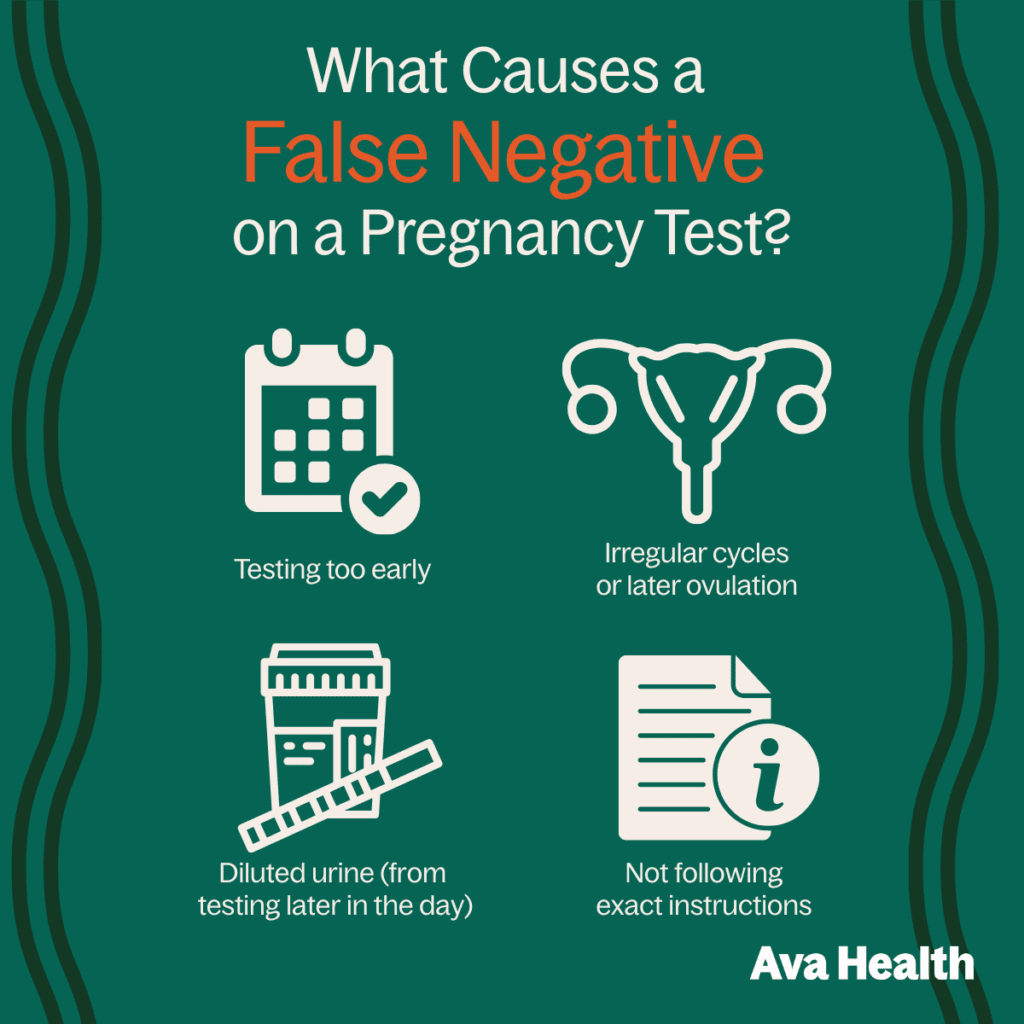
Common causes include:
- testing too early
- irregular cycles or later ovulation
- diluted urine from testing later in the day
- not following instructions exactly (reading the test within the timeframe specified in the instructions)
Testing first thing in the morning and waiting a few days before retesting often brings clearer results.
False Positive Pregnancy Tests (Rare)
A false positive means the test says you’re pregnant, but you’re not. This is uncommon with today’s tests.
Possible reasons include:
- a very early pregnancy loss: hcg levels decrease slowly after a pregnancy loss. “Non-pregnancy levels” may not be reached for a few weeks.
- fertility medications containing hCG
- reading the test after the recommended time
- a faulty or expired test
In most cases, a positive result reflects real hCG in the body, even if the pregnancy does not continue.
Can You Feel Pregnant but Test Negative?
Yes — and this happens more often than many women expect.
Early pregnancy symptoms can feel very similar to premenstrual symptoms, such as:
- breast tenderness
- nausea
- fatigue
- cramping or spotting
Hormones rise before a period and during early pregnancy, which can make these sensations hard to interpret. Feeling symptoms does not always mean something is wrong — it often means your body is adjusting.
To see a more detailed list of early pregnancy symptoms, check out: First Pregnancy Symptoms
When Pregnancy Tests Are Most Accurate
Pregnancy tests are most reliable when:
- you test after a missed period
- you use first-morning urine
- you follow the instructions carefully
About one week after a missed period, most tests are over 99% accurate.
What to Do If Results Feel Confusing
If your test doesn’t match your symptoms, taking things step by step can help.
If your test is negative but pregnancy still feels possible:
- wait 48–72 hours and test again
- use first-morning urine
- avoid drinking large amounts of fluid before testing
If your test is positive and you weren’t expecting to be pregnant:
- repeat the test with a different brand
- consider confirming with a healthcare provider, like Ava Health
If you’re still uncertain, a provider can offer blood testing or follow-up care to help you understand what’s happening.
When to Seek Medical Care
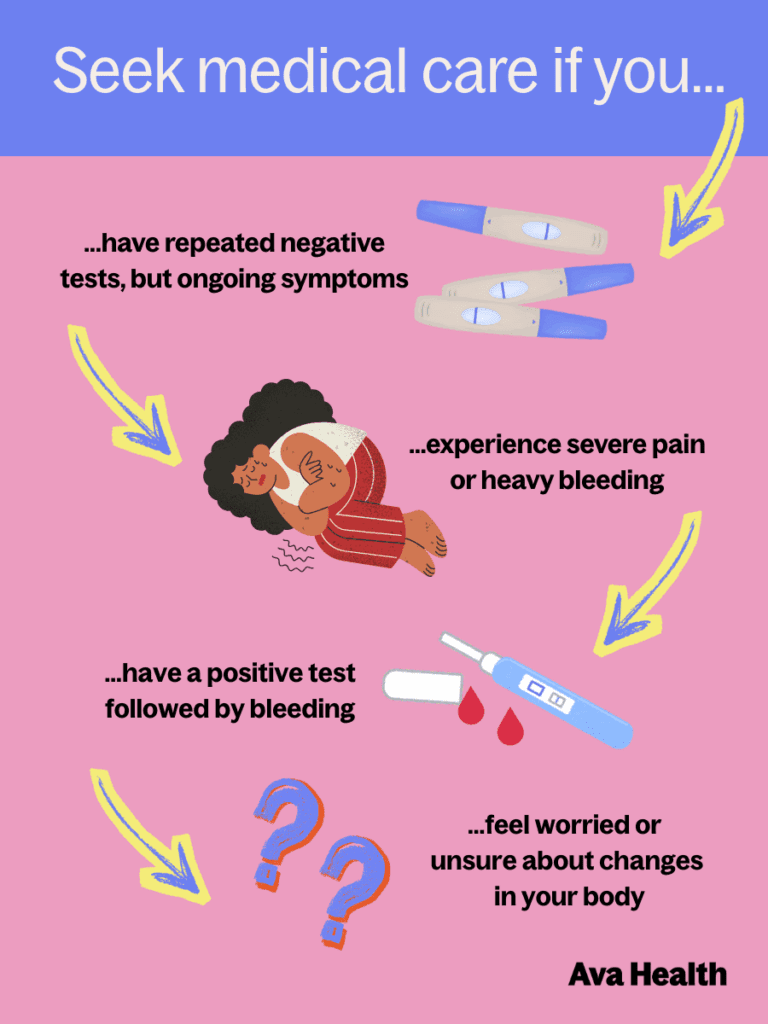
It may be helpful to contact a healthcare provider if you:
- have repeated negative tests but ongoing symptoms
- experience severe pain or heavy bleeding
- have a positive test followed by bleeding
- feel worried or unsure about changes in your body
Clear information and supportive care can make a stressful situation feel more manageable.
The Bottom Line
Pregnancy tests are very accurate — but timing matters.
Most unexpected results happen because:
- testing happened too early
- hormone levels were still rising
- instructions weren’t followed exactly
If you’re unsure, waiting a few days and testing again often brings clarity. And if questions remain, support and reliable information are available. You deserve understanding, patience, and care as you navigate this moment.
Sources
Mayo Clinic. Home Pregnancy Tests: Can You Trust the Results? Mayo Clinic, 2025,
https://www.mayoclinic.org/healthy-lifestyle/getting-pregnant/in-depth/home-pregnancy-tests/art-20047940.
Cleveland Clinic. Pregnancy Test: When to Take, Types & Accuracy. Cleveland Clinic, 28 Nov. 2022,
https://my.clevelandclinic.org/health/diagnostics/9703-pregnancy-tests.
MedlinePlus. Pregnancy Test (Lab Test). U.S. National Library of Medicine,
https://medlineplus.gov/lab-tests/pregnancy-test/.
Office on Women’s Health. Pregnancy Tests. U.S. Dept. of Health & Human Services, 24 Oct. 2025,
https://www.womenshealth.gov/a-z-topics/pregnancy-tests.
U.S. Food & Drug Administration. Pregnancy. FDA,
https://www.fda.gov/medical-devices/home-use-tests/pregnancy.
WebMD. Pregnancy Tests: When to Take One, Accuracy, and Results. WebMD, 2025,
https://www.webmd.com/baby/pregnancy-tests.
American Pregnancy Association. Pregnancy Tests | Urine and Blood | Everything You Need to Know. American Pregnancy Association,
https://americanpregnancy.org/getting-pregnant/understanding-pregnancy-tests/.
Share this Blog
Disclaimer: The content on this site is for informational purposes only and does not constitute medical advice. Ava Health does not refer for or perform abortions. All medical information is accurate at the time of publishing.
Other Articles You Might Be Interested In