
If you’re considering abortion, you might be researching options and wondering what procedures or screenings are necessary. One of the most critical steps you can take before making any decision is receiving an ultrasound before abortion.
An ultrasound scan:
- Is safe and painless
- Uses sound waves to create a picture of your uterus and developing pregnancy.
- Confirms key details about your pregnancy that can impact your health, safety, and the medical decisions ahead of you.
In this blog, we’ll explore three essential reasons to have an ultrasound before an abortion, what to expect during the scan, and how Ava Health can support you with no-cost pregnancy confirmation services.
What Is an Ultrasound and Why Is It Important Before an Abortion?
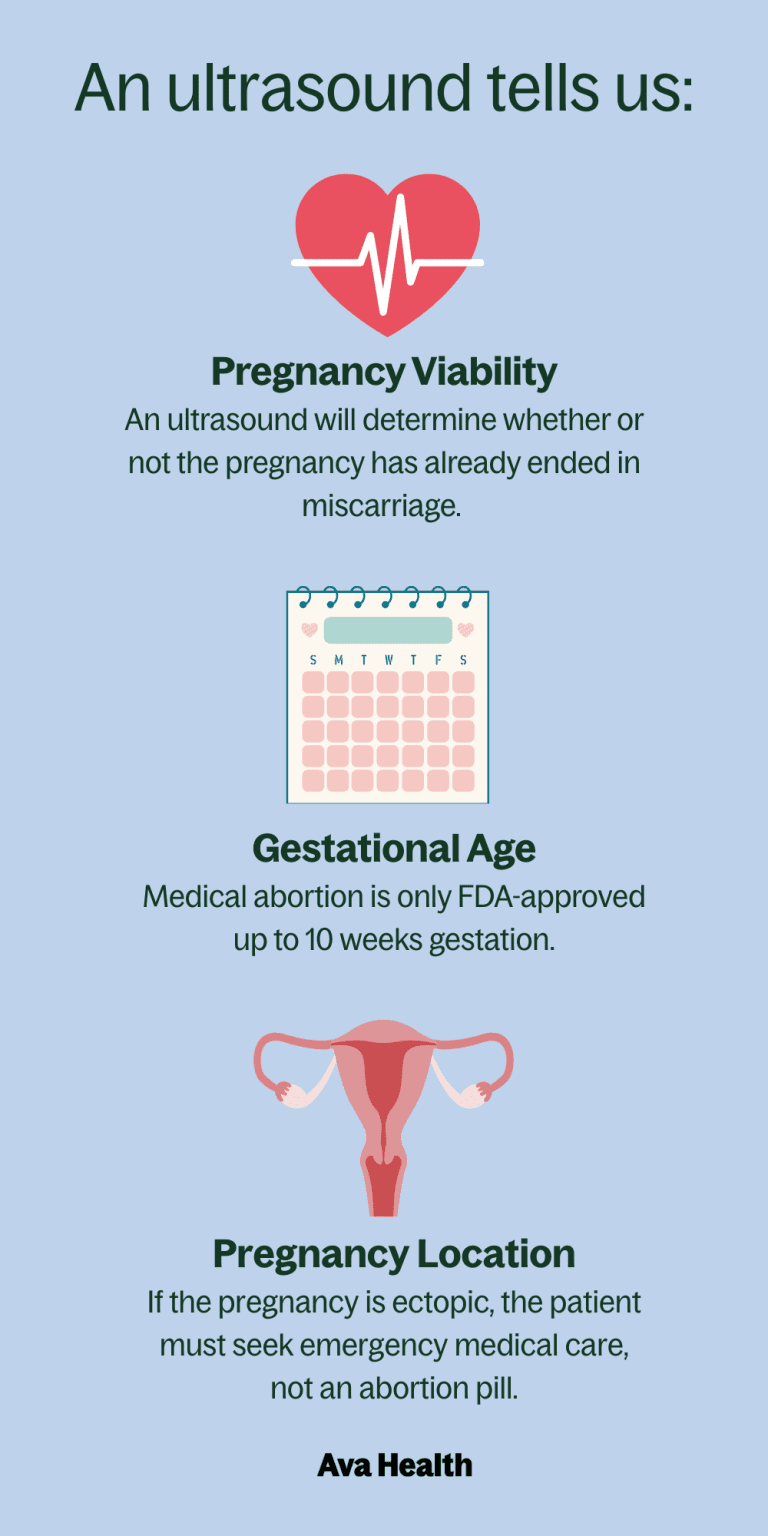
In pregnancy care, this scan allows medical providers to:
- Confirm pregnancy viability and rule out miscarriage
- Determine how far along you are
- Verify the pregnancy is in the uterus and is not ectopic
These are all crucial factors to understand before proceeding with any type of abortion procedure.
Without this information, you may face unnecessary risks or complications.
1. Confirm Pregnancy Viability and Rule Out Miscarriage
Many people assume that a positive home pregnancy test is all they need to move forward with an abortion. However, a pregnancy test only detects the hormone hCG (human chorionic gonadotropin) in your urine. It does not confirm whether the pregnancy is viable or ongoing.
What does pregnancy viability mean?
- A viable pregnancy is one that is developing normally with the potential to continue.
- Unfortunately, not all pregnancies continue to develop—approximately 25% of pregnancies end in miscarriage, with most occurring in the first trimester.
Symptoms like bleeding or cramping may indicate a miscarriage, but not always. Sometimes, a pregnancy may stop progressing without any obvious signs. This is known as a missed miscarriage, and it can only be confirmed through an ultrasound scan.
Why does this matter before abortion?
If your pregnancy has already ended in miscarriage, there is no need for an abortion procedure. However, medical treatment may still be necessary to manage the miscarriage and prevent complications such as infection or heavy bleeding. An ultrasound can provide the clarity needed to understand what is happening in your body.
2. Determine How Far Along You Are (Gestational Age)
Gestational age refers to how far along you are in your pregnancy, measured from the first day of your last menstrual period (LMP). An ultrasound is the most reliable way to measure gestational age.
Why is gestational age important?
Knowing exactly how far along you are is essential because your abortion options depend on this information. For example:
- Medication abortion (also called the abortion pill) is FDA-approved up to 10 weeks gestation.
- After 10 weeks, medication abortion becomes less effective and increases the risk of incomplete abortion or serious side effects.
- In-clinic surgical abortion procedures may be required if you are further along.
Choosing the appropriate abortion method depends on accurate dating. Skipping this step may put you at risk of using a method that is not safe or effective for your stage of pregnancy.
3. Verify the Pregnancy Is Located in the Uterus and is Not Ectopic
- Occurs when a fertilized egg implants outside the uterus, most often in a fallopian tube.
- While rare (about 1 in 50 pregnancies), ectopic pregnancies can be life-threatening if not diagnosed early.
Warning Signs of Ectopic Pregnancy
- Sharp or stabbing abdominal pain
- Shoulder pain
- Vaginal bleeding or spotting
- Dizziness or fainting
- Are difficult to distinguish from early pregnancy symptoms without an ultrasound
Why Ultrasound Is the Only Way to Confirm Pregnancy Location
Only an ultrasound can definitively confirm where the pregnancy is located. If an ectopic pregnancy is detected, emergency treatment is required. Abortion procedures do not treat ectopic pregnancies, and relying on abortion pills or standard methods could delay life-saving care.
What to Expect During an Ultrasound at Ava Health
Getting an ultrasound can feel intimidating, but at Ava Health, the process is comfortable and reassuring, providing you with the peace of mind you need.
Our Free Ultrasound Services Include:
- Lab-quality urine pregnancy testing
- A limited obstetric ultrasound (first or second trimester, if eligible)
- Interpretation of results by a medical physician.
- Information on pregnancy options and next steps
Common Questions About an Ultrasound Before Abortion
Is an ultrasound required before an abortion?
In some states, yes. Ultrasounds may be legally required to determine gestational age or confirm pregnancy viability. Even if not required by law, it is still strongly recommended to protect your health.
Will I have to pay for an ultrasound at Ava Health?
At Ava Health, all our services are free and private. Your eligibility for an ultrasound will be determined by your nurse at time of appointment.
Does Ava Health provide or refer for abortions?
No. Ava Health does not perform or refer for abortion procedures. However, we do provide accurate, up-to-date information on all pregnancy options, including parenting, adoption, and abortion. Our goal is to equip you with the information you need to make an informed decision.
Request Your Free Pregnancy Confirmation Appointment Today
If you think you may be pregnant or have already had a positive test, scheduling an early ultrasound is one of the best first steps you can take.
At Ava Health, we are committed to providing safe, compassionate, and confidential services to anyone navigating a pregnancy decision. You are not alone, and you deserve to have all the facts before making a choice that impacts your life.
Schedule your no-cost appointment today:
- Professional pregnancy confirmation
- Free ultrasound
- Education on pregnancy options
You don’t have to go through this alone. We’re here to support you every step of the way.
Disclaimer: Ava Health does not provide or refer for abortions. All information in this article is based on current medical guidelines and is accurate at the time of publication. If you are experiencing a medical emergency, seek immediate care.
Sources
- Mayo Clinic Staff.
“Miscarriage.” Mayo Clinic, 14 Apr. 2023.
https://www.mayoclinic.org/diseases-conditions/miscarriage/symptoms-causes/syc-20354298 U.S. Food and Drug Administration.
“Mifepristone (Mifeprex).” FDA, updated 28 Apr. 2017.
https://www.fda.gov/drugs/postmarket-drug-safety-information-patients-and-providers/mifepristone-mifeprexAmerican College of Obstetricians and Gynecologists.
Ectopic Pregnancy. ACOG Patient Education FAQ, Mar. 2021.
https://www.acog.org/womens-health/faqs/ectopic-pregnancyAmerican Pregnancy Association.
“Ultrasound.” American Pregnancy Association, 2022.
https://americanpregnancy.org/prenatal-testing/ultrasound/
Wondering if you might be pregnant?
Get free, confidential pregnancy testing + support.