
You might feel uncertain about what abortion laws mean for you today. The legal landscape has changed quickly, and it can be difficult to know what’s still protected, what has shifted, and how to move forward with confidence. Wherever you are in this process, you deserve clarity, safety, and peace of mind.
What to Know — Information & Guidance
Since the 2022 Dobbs v. Jackson Women’s Health Organization decision, abortion rights are no longer dictated at the federal level. Each state now sets its own policies—some protecting access; others restricting it.
For people in Oregon, or those who might travel here, it’s important to understand how these laws affect abortion decisions. Knowing the facts can help you make informed choices about your next steps.
This guide will:
- Explain how abortion laws now differ across states
- Outline Oregon’s current legal protections and practical realities
- Explore how Oregon’s “shield law” works for residents and visitors
- Offer practical guidance and answers to common questions
The Bigger Picture
Across the country, laws may differ, but one truth remains: every person’s life and dignity hold immense value. Understanding your rights isn’t just about legality—it’s about protecting your (and those you care about) well-being, making thoughtful decisions, and finding strength in the process.
The Post-Dobbs Landscape: A Patchwork of State Laws
Before Dobbs, federal precedent under Roe v. Wade protected abortion rights nationwide. Now, states have full authority to regulate abortion individually.
- Some states enacted near-total bans, allowing abortion only to save a pregnant woman’s life.
- Others protect abortion access, often up to the point of fetal viability—or even beyond, depending on medical judgment.
- Many states fall somewhere in between, with differing rules, timelines, and exceptions.
Because these laws vary so widely, access now depends heavily on where you live—or whether you can travel.
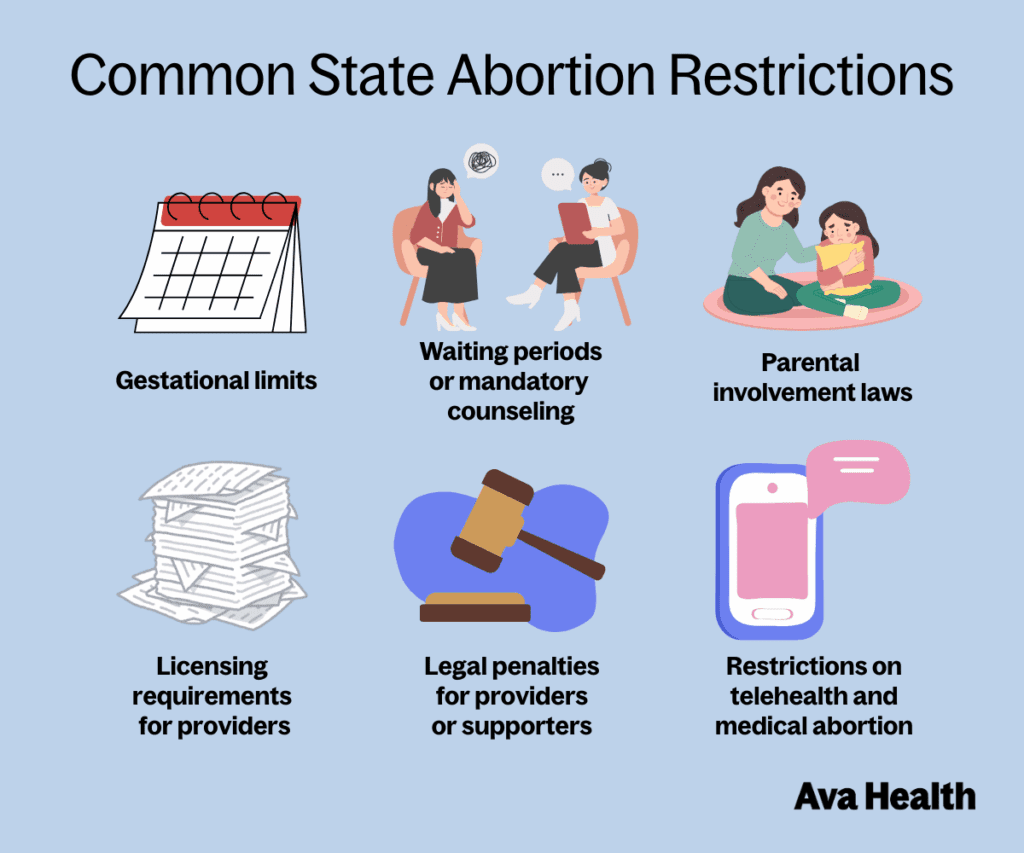
Common restrictions in other states include:
- Gestational limits (banning abortion after a certain number of weeks)
- Waiting periods or mandatory counseling
- Parental involvement laws for minors
- Licensing requirements for clinics and providers
- Legal penalties for providers or supporters
- Restrictions on telehealth or medication abortion
For people in Oregon, these contrasts matter—especially given the state’s proximity to places with stricter laws.
Oregon’s Legal Landscape: Rights, Protections, and Practical Realities
Oregon is among the most protective states in the nation when it comes to abortion rights.
Legal Protections
- Abortion is legal and protected for anyone within the state, regardless of residency.
- HB 2002 (2023) codifies that every person has a fundamental right to make decisions about reproductive health—including the right to terminate a pregnancy.
- Shield Law Protections: This law helps safeguard providers and patients from out-of-state investigations or penalties related to lawful abortion care in Oregon.
Limits and Consent
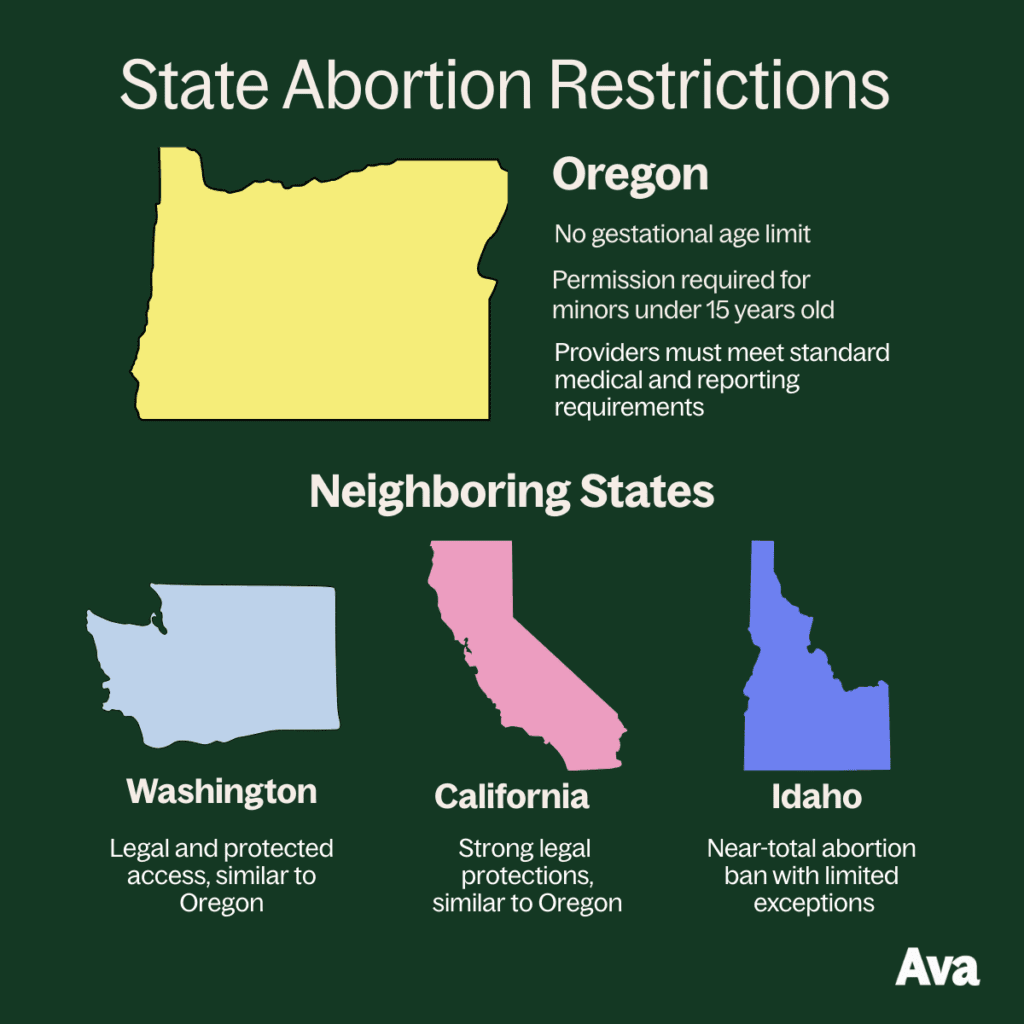
- Oregon does not have a set gestational limit; procedures are guided by medical judgment.
- For individuals aged 14 or younger, parental consent is required.
- Providers must meet standard medical and reporting requirements.
Borders and Beyond: How Neighboring States Affect Access
Oregon’s borders touch states with very different approaches:
Practical Guidance: What Oregonians (and Visitors) Should Know
If you’re considering an abortion in Oregon, here are some key steps and considerations:
Know What’s Legal
As of 2025, Oregon law allows abortion—without residency restrictions or waiting periods.
Know Your Options
Several health clinics offer key medical screenings that assist in your decision-making process about your pregnancy, including Ava Health. Check that the clinic offers the services you need and can provide care within Oregon’s borders.
Understand Consent Rules
If you are 14 or younger, you will need parental consent for an abortion in Oregon.
Protect Your Privacy
Keep personal records secure and know that Oregon’s shield law limits information sharing with other states.
Seek Support
If you don’t have support within your community, we’d love to get you connected to the resources you need. Though we don’t provide or refer for abortions, our belief in whole-person care allows us to support you in other ways.
Common Questions — Answered with Clarity
Q: Does Oregon allow abortion at any stage?
Yes. Oregon law does not set a gestational limit; procedures are based on medical standards and judgment. If you want to know what types of abortion you are eligible for (based on your gestational age), see Am I Eligible for the Abortion Pill?
Q: Can someone from another state access abortion care in Oregon?
Yes. Oregon allows nonresidents to receive abortions and makes sure both patients and providers do not become subject to out-of-state legal action.
Q: Are there waiting periods?
No. Oregon does not require waiting periods beyond standard medical practice.
Q: What about privacy?
Oregon’s laws include strong patient privacy protections and limit compliance with out-of-state legal demands.
Q: Could these protections change?
Laws can evolve. Staying informed through trusted legal or health resources ensures you always know what is available to you.
Reflection — Encouragement & Autonomy
If you’re navigating these choices, take time to gather information and breathe. It’s okay to ask questions and to seek help from people and professionals you trust. Your safety, privacy, and peace of mind are worth protecting.
Support & Next Steps
If you’d like to understand your options or want information about abortion in Oregon, see Abortion Risks and Facts, or contact us today to make an appointment. You’re not alone in this. There is clarity, compassion, and care available—whenever you’re ready.